Conversations from the Airstream: Stadiums, Soccer, & the Fan Experience
Posted July 02, 2026 · Education
An Interview Featuring Harry Mark, FAIA, Kyle Richter, & Zach Burson
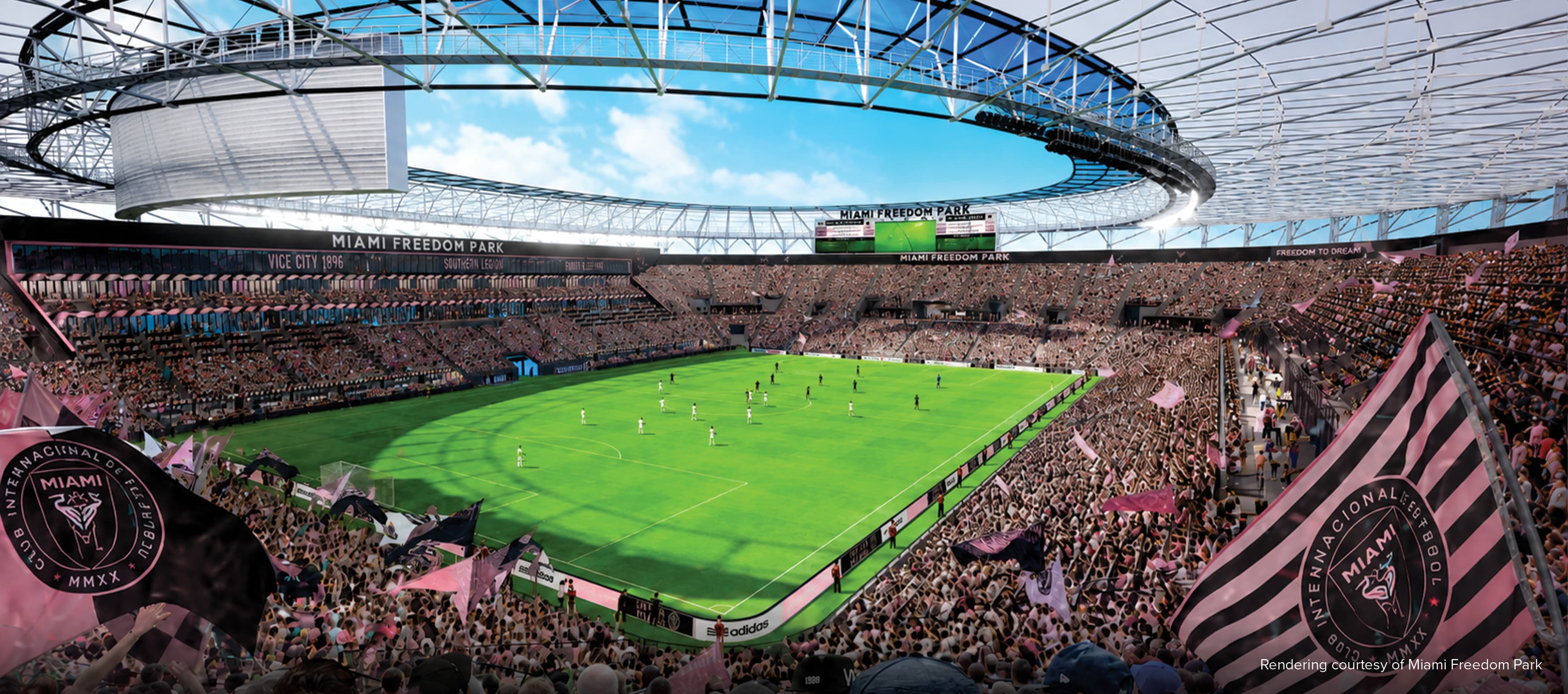
A stadium is never just a stadium. It is a wayfinding challenge, a branding exercise, a placemaking opportunity, and a community anchor all folded into one. RSM Design has built a deep body of work in that environment, from wayfinding systems at Hollywood Park adjacent to SoFi Stadium, to soccer training facilities and community-centered developments like Miami Freedom Park, home of Inter Miami CF. With the World Cup now bringing that conversation to North America, Principal Kyle Richter convened a coast-to-coast “Conversation from the Airstream” at RSM Design’s San Clemente studio, joined by Associate Zach Burson from Dallas and Executive Director Harry Mark, FAIA, from New York. What follows is a Q&A from that conversation.
RSM Design’s work is rooted in how people experience place, and sports environments are among the most emotionally charged spaces a designer can work within. How does that inform the way you approach a project in the sports and entertainment market?
Harry Mark, FAIA: One of the most interesting aspects of working on a sports-based project is fan engagement. There’s such passion about a particular sport or team, and discovering the balance between engaging that fan through branding while not over-branding is critical. We’ve all seen environments that lean so heavily into team pride that they lose universality. The real question is: what brings that space to life on non-game days? It’s not an all-or-nothing solution when it comes to placemaking in those environments.
Kyle Richter: For most teams and spaces, a lot of it comes down to team and city context history. Incorporating a team’s past stars, championships, and story into the built environment adds a meaningful layer that resonates with fans. That kind of storytelling is especially powerful when multiple teams share a single stadium.
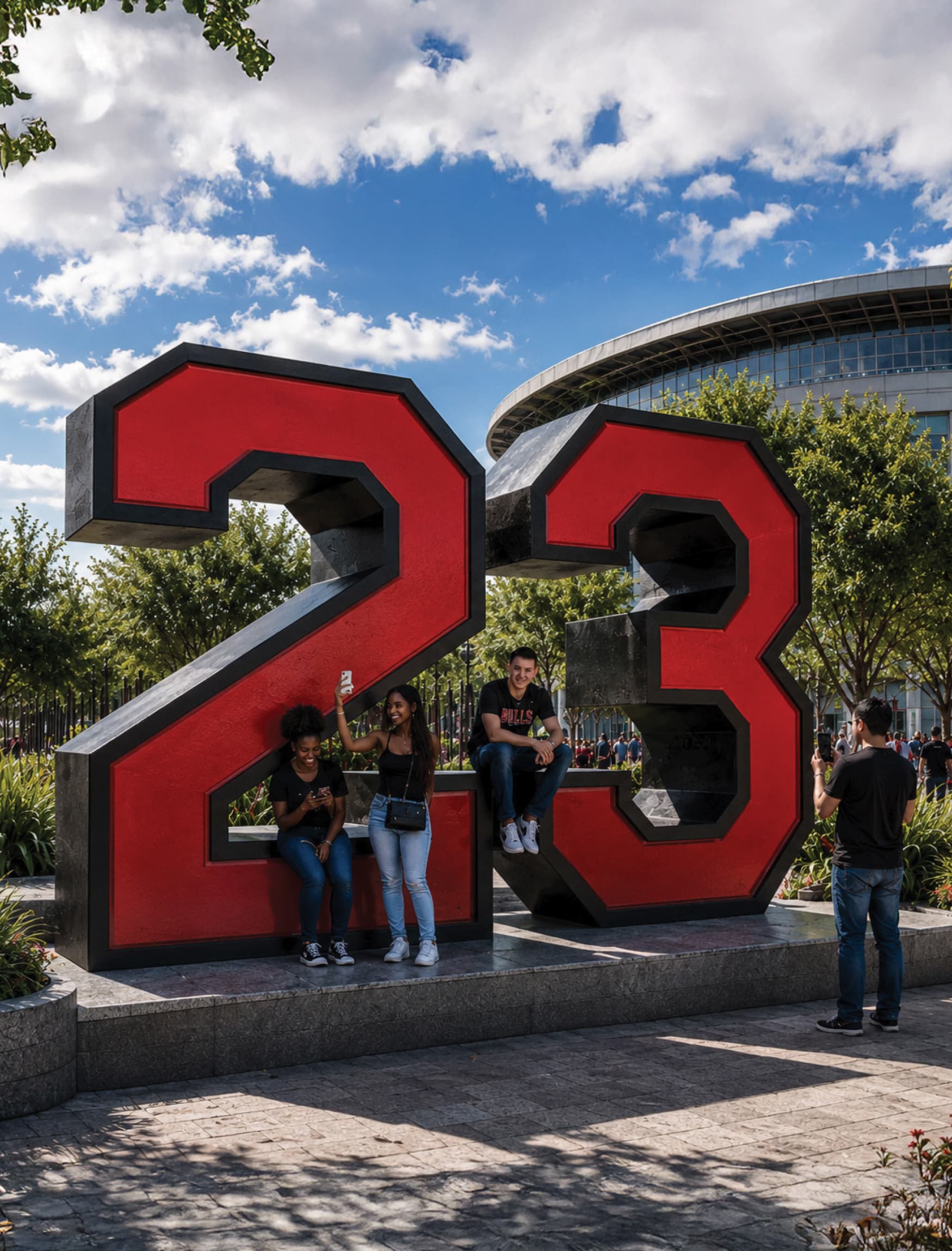
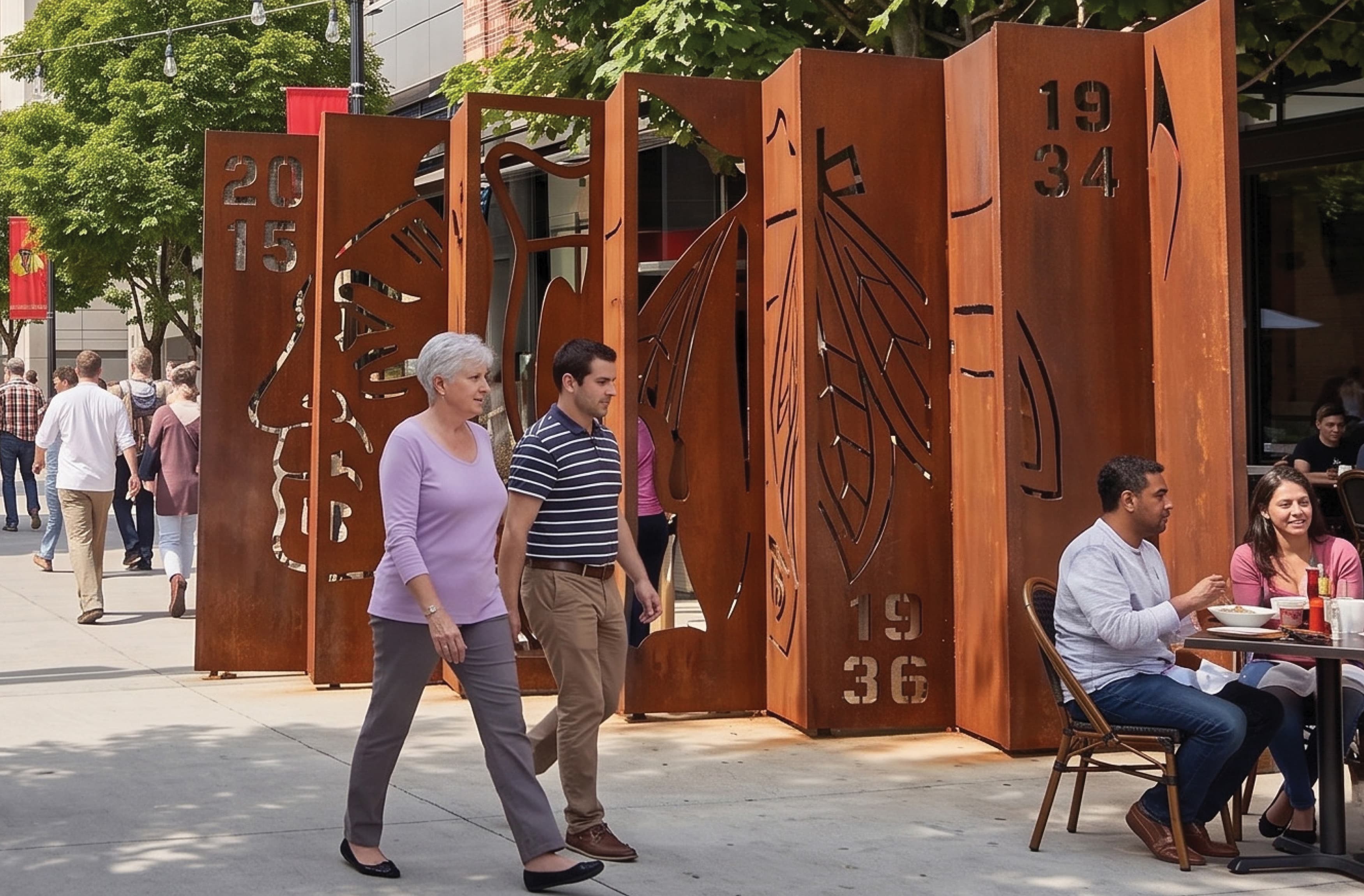
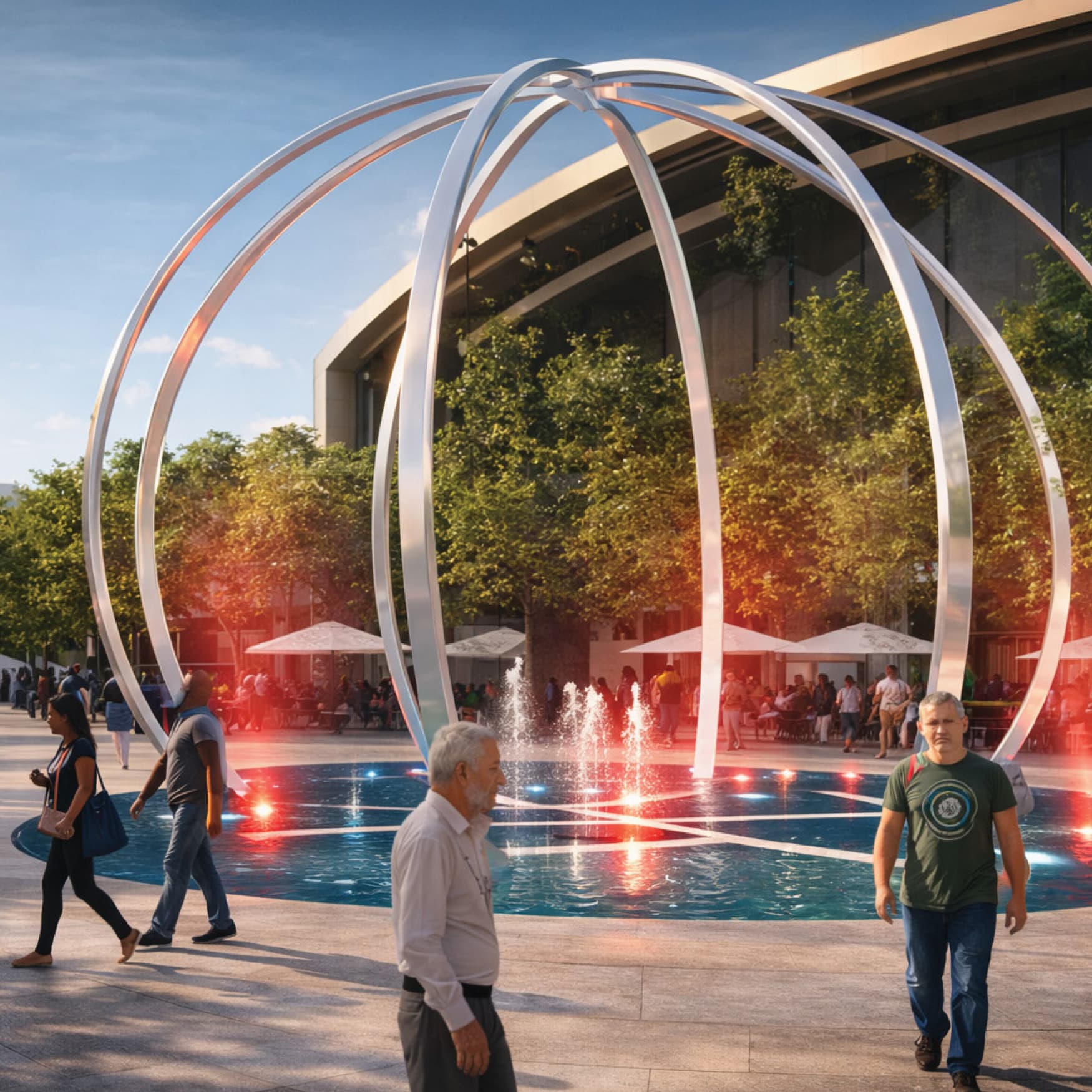
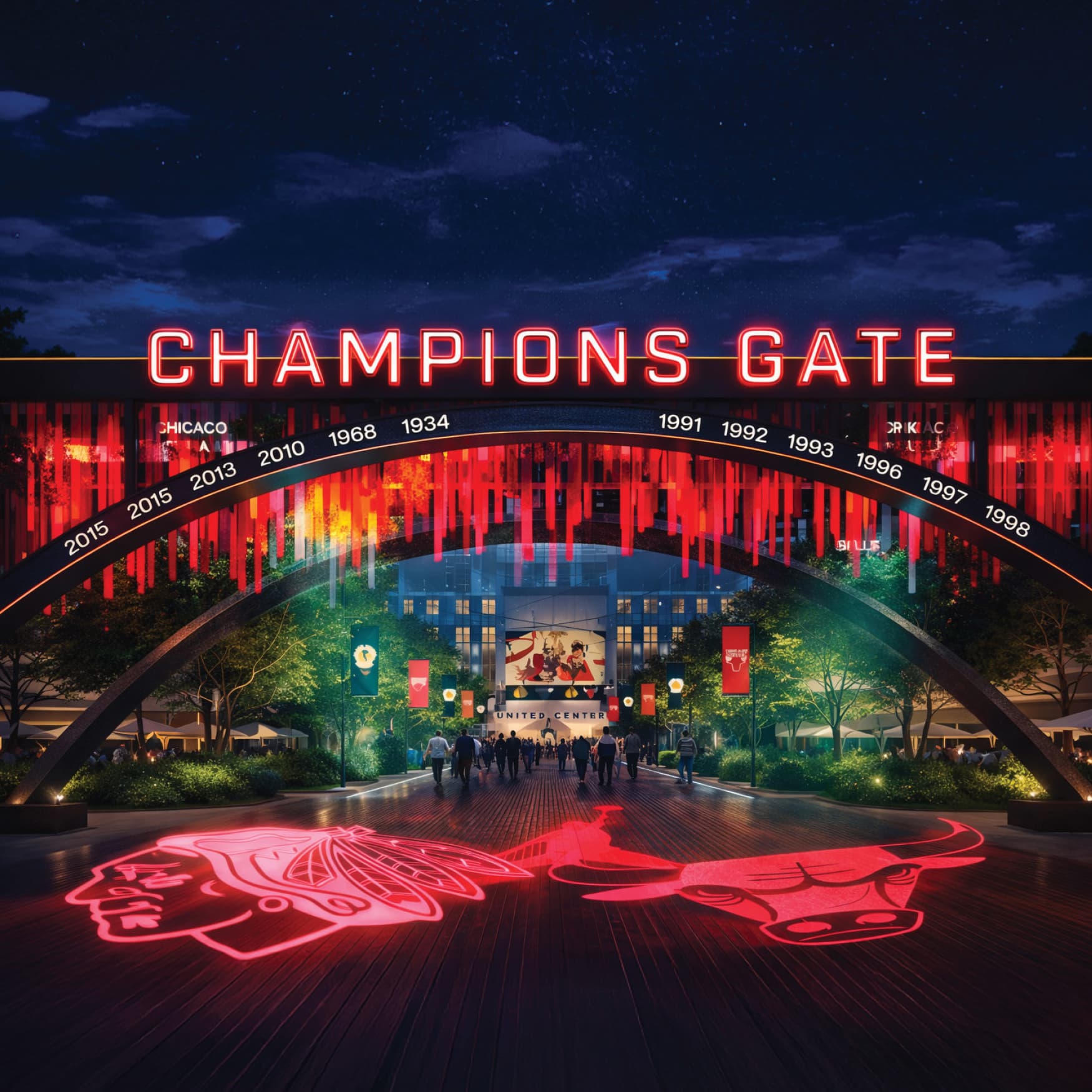
United Center, Chicago, IL
RSM Design’s international work means navigating design across vastly different cultural contexts. How does that global experience inform the way you think about sports environments and identity?
HM: RSM Design’s international portfolio informs our approach to stadium and stadium-adjacent projects in two key ways. The first is through universal design principles, particularly the use of international icons that can be read across languages and cultures. At the Cotton Bowl Stadium, we used universal symbols for concessions, restrooms, and navigation rather than relying on words, which made the graphic language more impactful and accessible. The second layer is cultural DNA. We look for the roots of a community and weave those into the project, whether through patterning, color, form, or shape, so that the design feels rooted to its specific sense of place rather than something that could be dropped into any stadium anywhere in the world.
From Hollywood Park to Miami Freedom Park, Kyle has worked across very different sports-adjacent environments. What has that range of experience taught you about how people move through and connect with those spaces?
KR: At the root of it, these projects are more similar than they are different. While the community, culture, or sport, sports-adjacent developments all want people to linger. They want to be the hub for the before and after the game, a place where people celebrate or process a loss together. The challenge is also getting people there on non-game days, which requires entertainment and retail offerings that can stand on their own. We want visitors and fans to linger, explore, and make these sport-adjacent spaces their first thought when they want to go to a space to hang out with their friends.
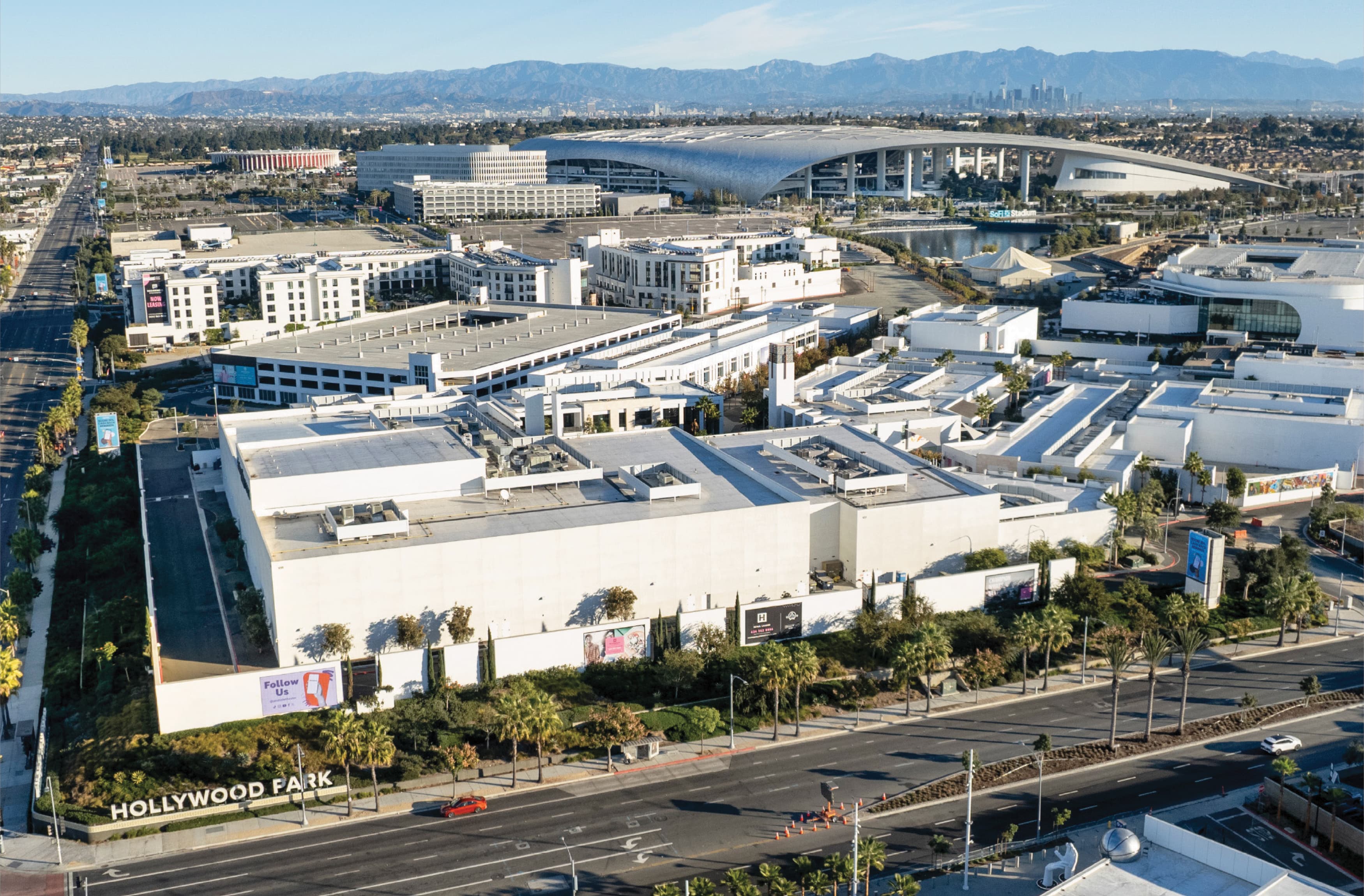
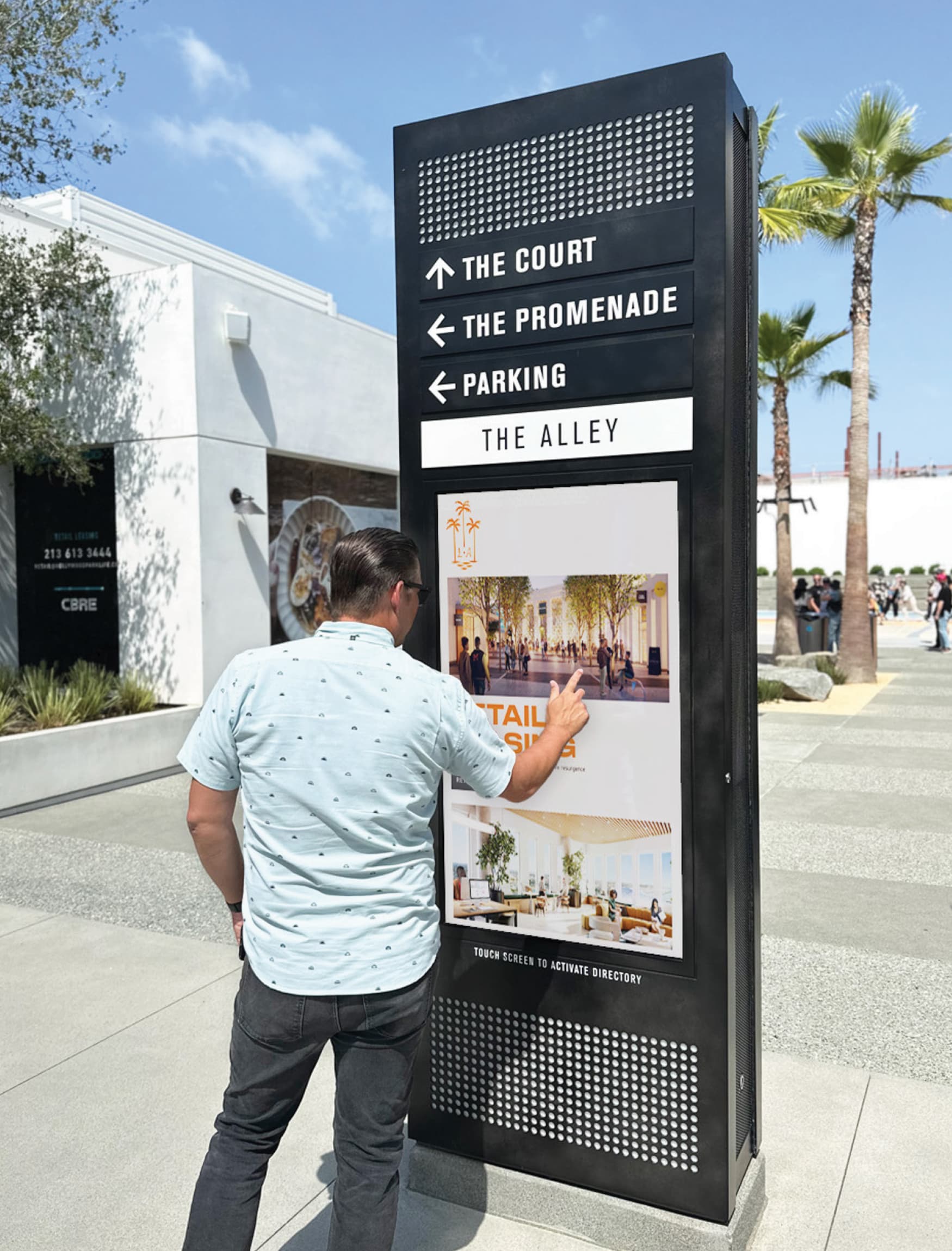
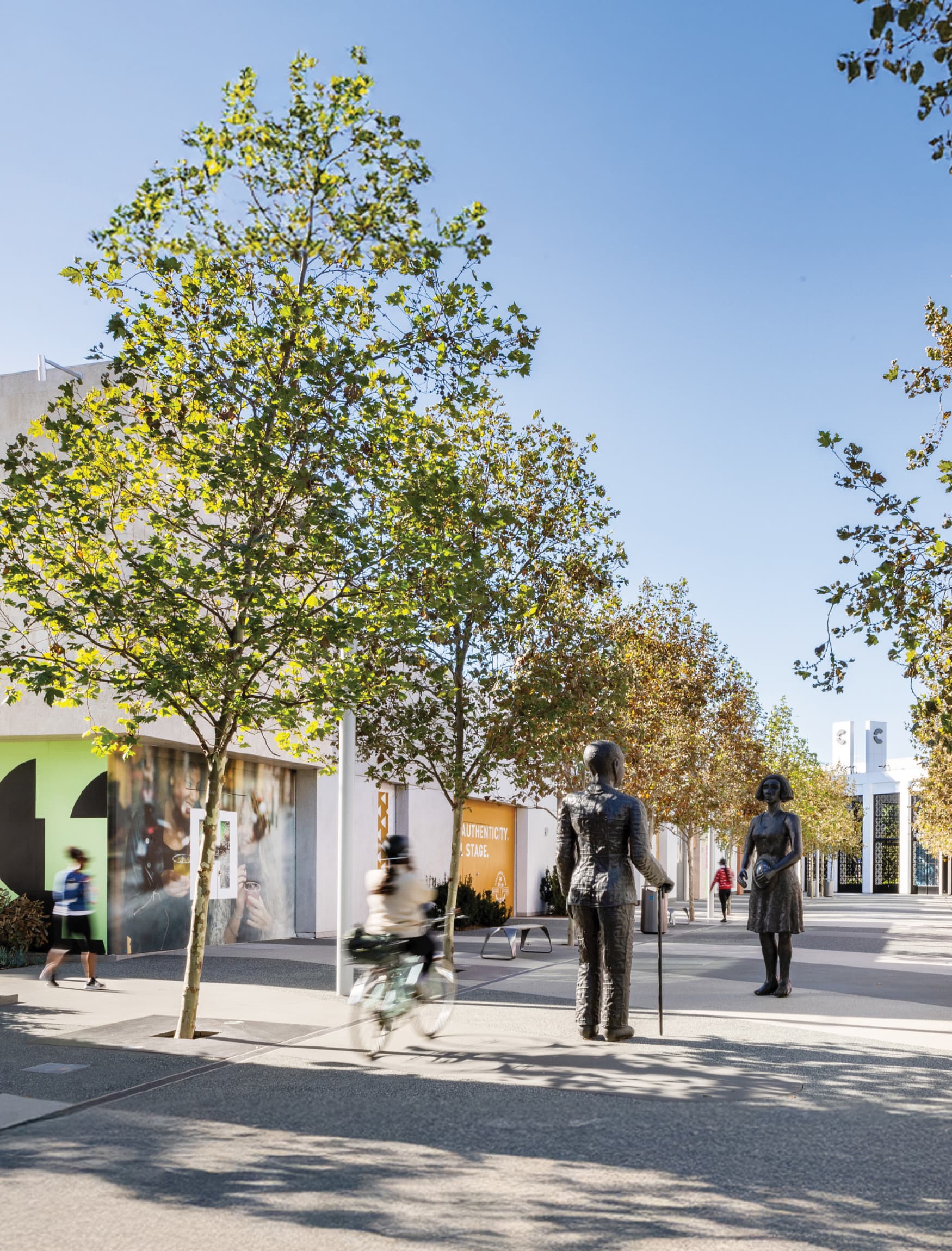
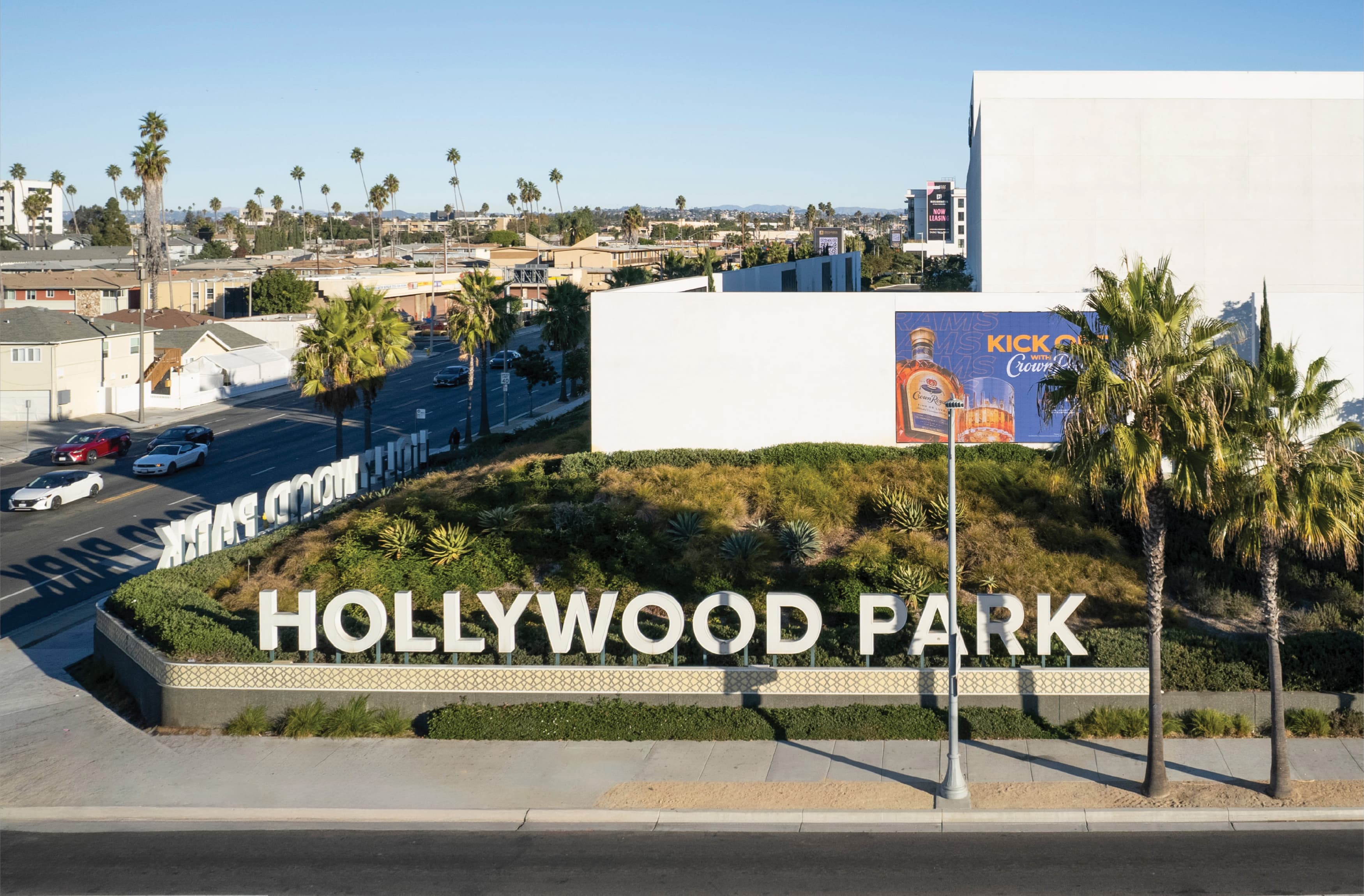
Hollywood Park, Los Angeles, CA
Zach, you have a personal connection to soccer that goes beyond your professional work. How does that inform your design approach, and what has the World Cup build-up felt like for you?
ZB: I’ve been playing soccer nearly my entire life, so I experience these spaces from both sides. As a player and fan, I notice how a venue feels, where the emotional moments happen. As a designer, I find myself asking what makes those experiences work, and how you replicate that through wayfinding, graphics, and architecture. Great design in these spaces isn’t just about aesthetics. It’s about creating an environment people can move through confidently and remember when they leave. Having the World Cup here in North America is genuinely exciting. Even my die-hard football friends who have spent years giving me a hard time for playing soccer are tuned in, which says everything about the reach of this tournament. These events leave a lasting legacy. The venues, the wayfinding systems, the public spaces created for an event like this continue serving communities long after it ends. Design has a real opportunity to shape that experience, both now and decades down the road.
HM: So when you’re on the pitch, does your designer’s brain kick in? Do you find yourself critiquing the signage?
ZB: Absolutely. Once you start working in this space, you see it everywhere. It’s like learning a new word and then suddenly noticing it constantly. You become aware of what’s working, what isn’t, and what you’d do differently.
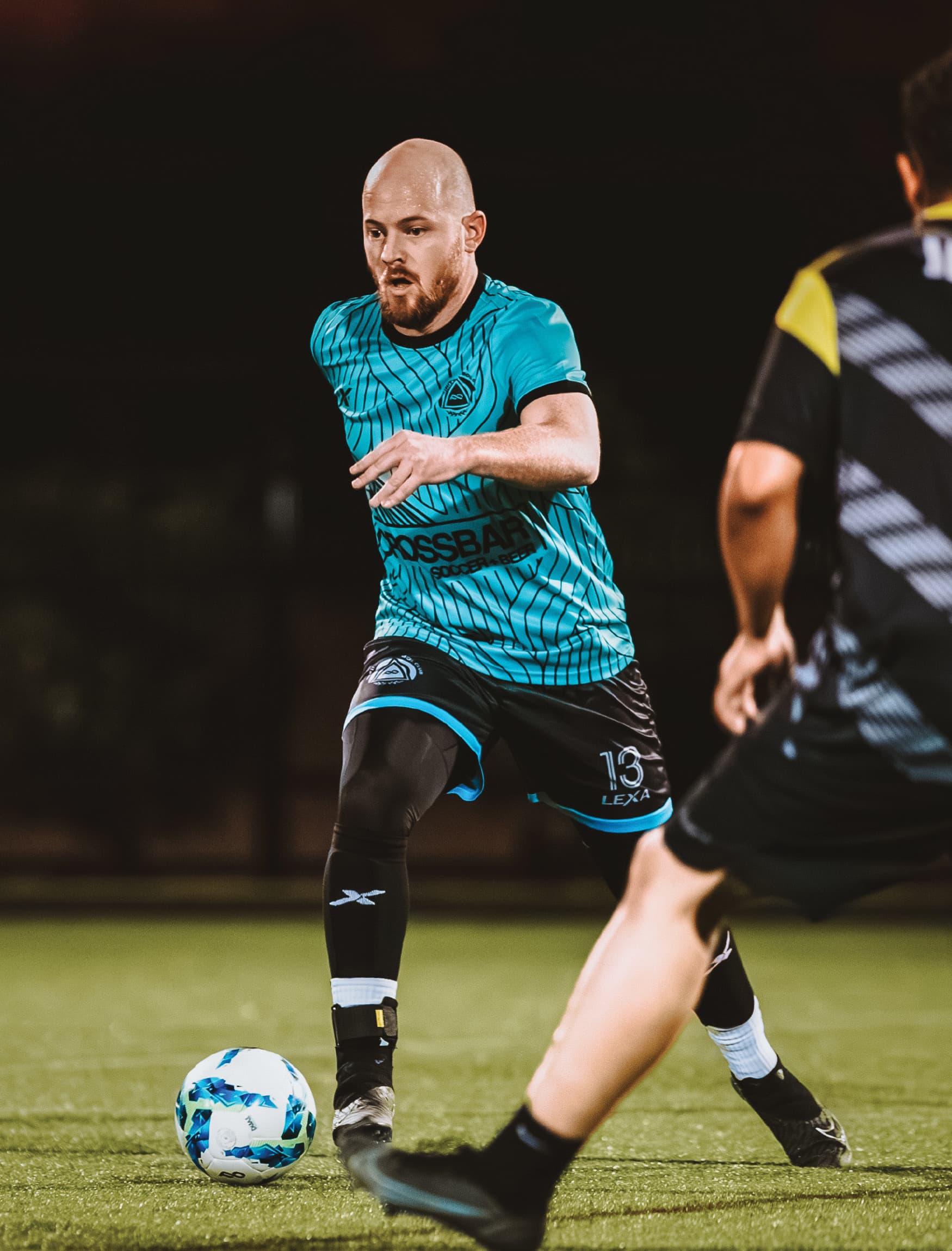
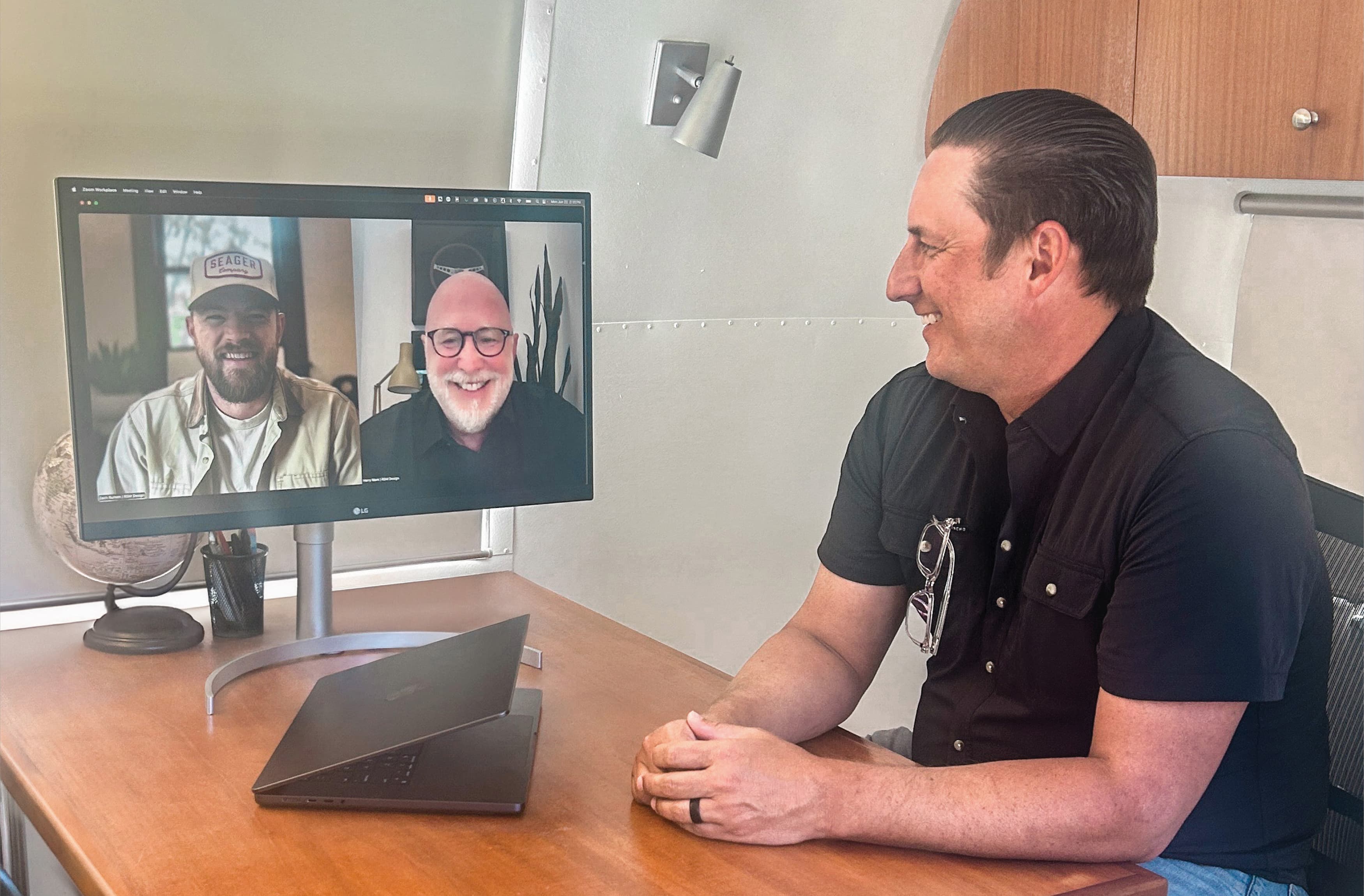
Associate Zach Burson playing soccer (left), Conversations from the airstream (right)
RSM Design’s Principle Centered Design framework is built around certainty, variety, and delight. How do those principles show up in a sports environment?
KR: I actually think those principles apply similarly across all project types, but in a stadium context they’re especially critical. Certainty matters enormously because so many visitors are there for the first time and cannot afford to feel lost. Variety means the brand shouldn’t show up the same way everywhere, whether that’s a cropped logo, a super graphic, or just a fragment of the team’s visual identity. And delight is probably the biggest piece, because you need to give 40, 80, or 100,000 people something to engage with beyond just the game itself.
ZB: Certainty in particular needs to operate well beyond game day. AT&T Stadium here in Dallas hosts concerts, World Cup matches, and the Spartan Race, among other events. A team may only play home games for three months out of the year, so the variety component has to carry the space across all those other moments.
HM: The Cotton Bowl Stadium is a great example of that balance. The environmental graphics respected the historic Art Deco quality of the space without being so fan-specific that a soccer team couldn’t feel at home there. I’d also push back a little on the hierarchy of those three principles. Inside the stadium, functional certainty dominates. But outside, in the adjacent developments and pre-game spaces, delight takes the top spot, followed by variety, followed by certainty.
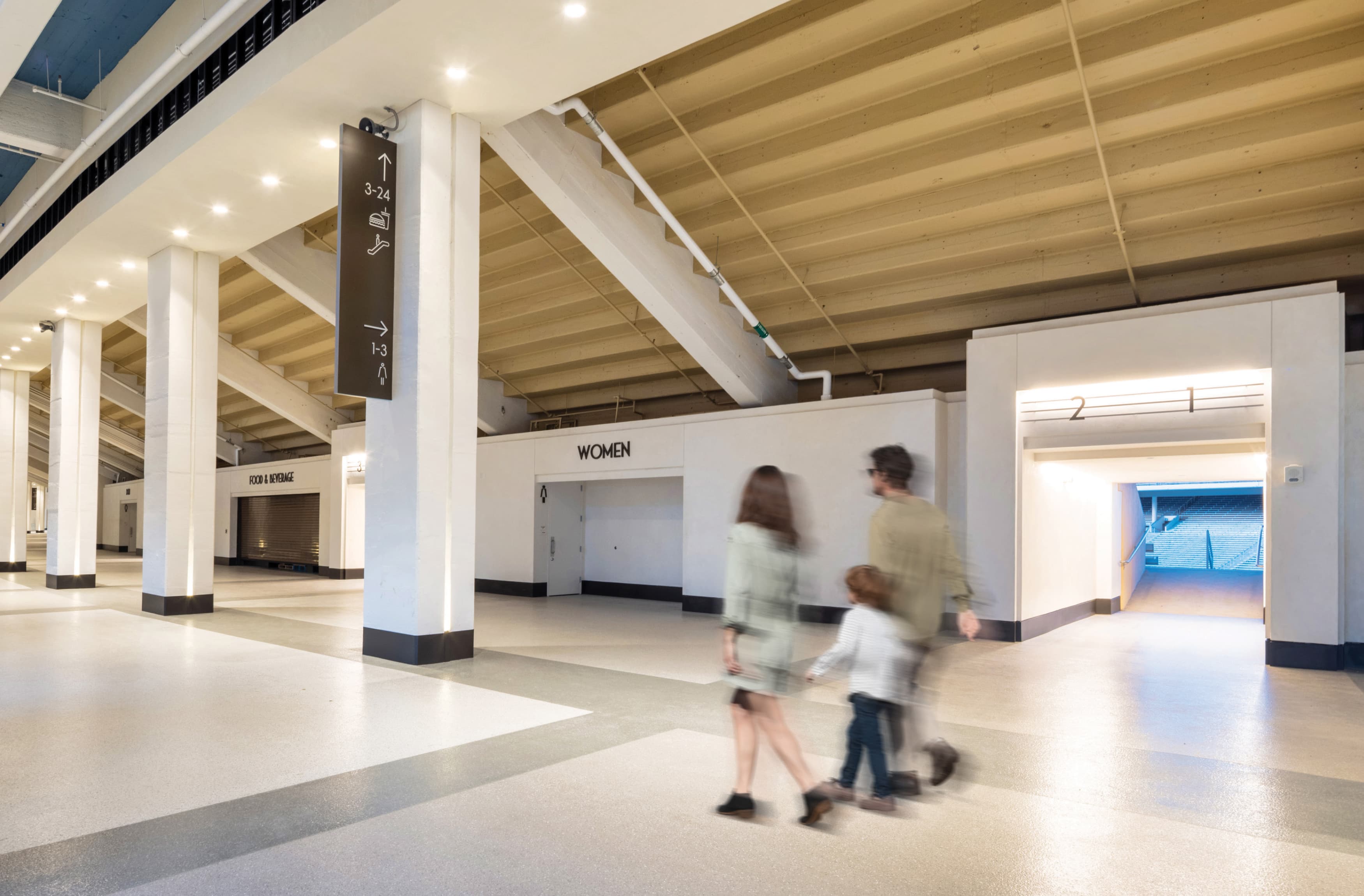
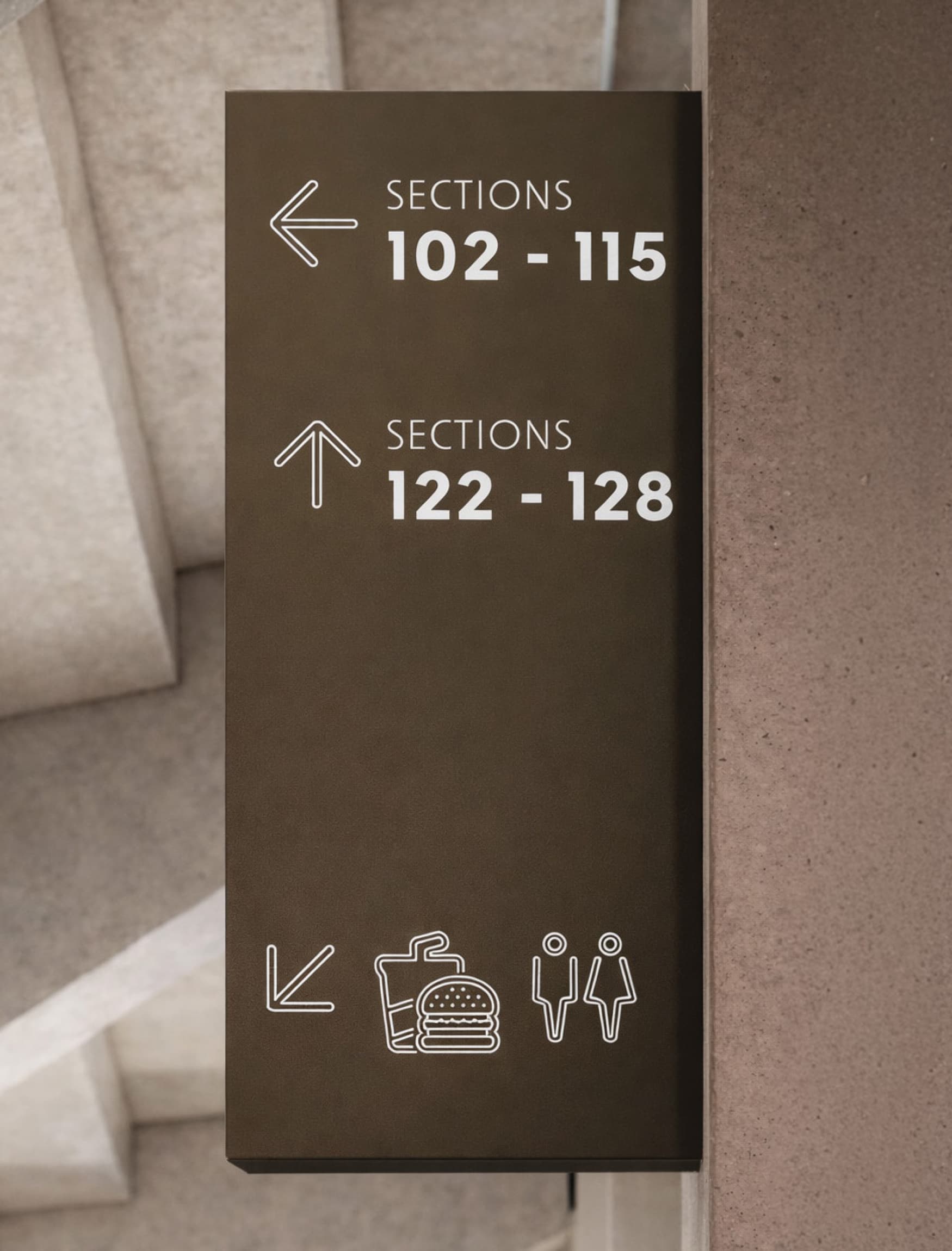
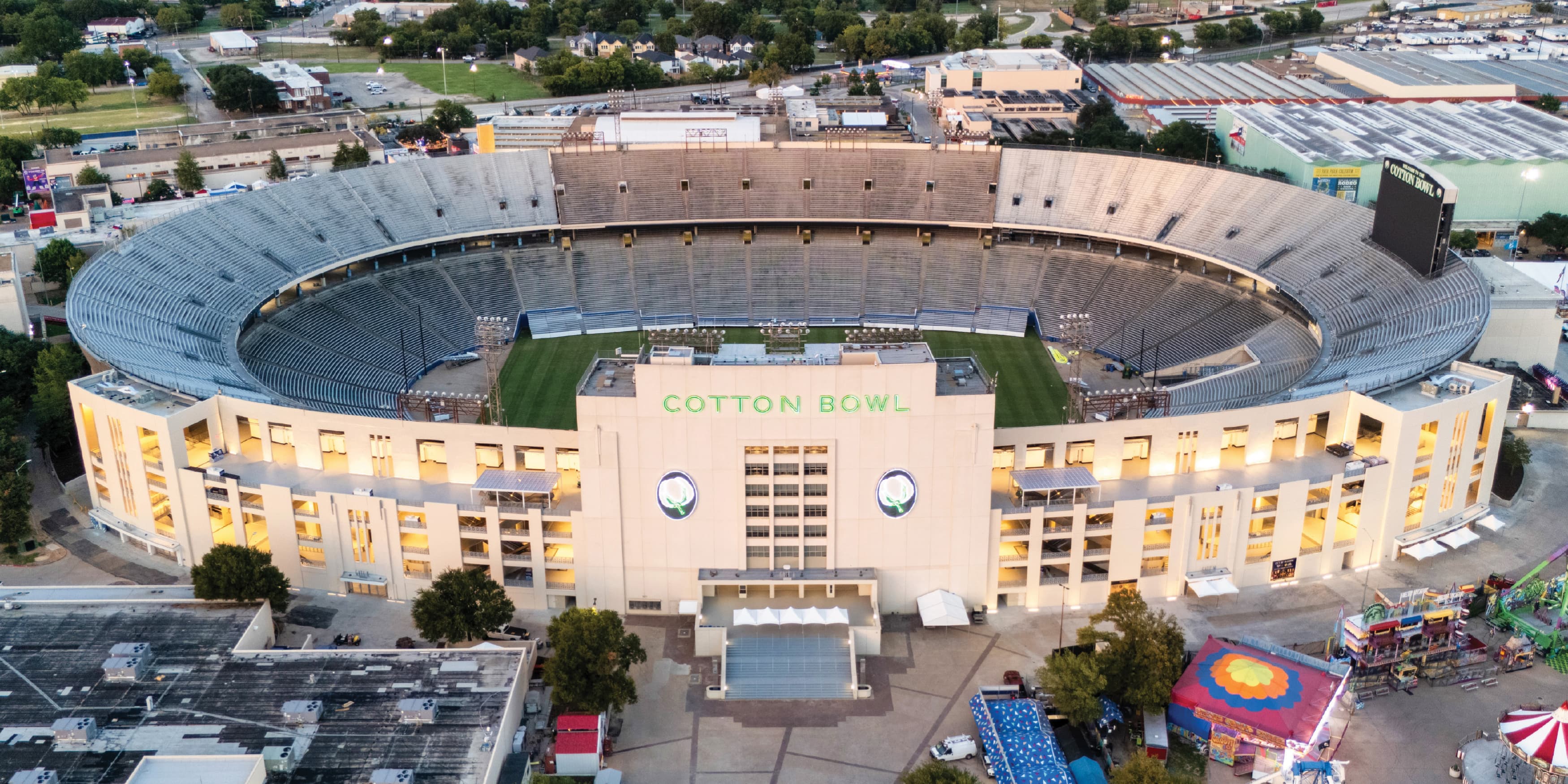
Cotton Bowl Stadium, Dallas, TX
When a project is tied to a sport or team with an existing identity and fan base, how does that shift the creative process?
KR: Project identity in a sports context is very layered and tricky. It’s not just about the team. It involves naming rights, sponsorships, sub-sponsors attached to specific plazas, and sometimes multiple teams sharing a single venue. At Hollywood Park, for example, most people know the stadium as SoFi first, and the teams second. Giving every stakeholder their hierarchical due, from a signage and wayfinding perspective, is genuinely complex.
ZB: You can achieve a strong identity through the brand’s broader vocabulary rather than overt logomarks. Sports teams often have more to play with in terms of color, typography, and graphic qualities than, say, a retail center. A well-placed super graphic or a distinct brand typeface can carry an identity just as effectively as a logo, and it tends to work more gracefully alongside sponsorship elements.
KR: One thing I love about the World Cup right now is the way brands are handling the FIFA naming restrictions. Levi’s Stadium is simply called “Stadium,” with a tarp draped over the logo out front. Heinz covered their branding so products are just labeled ketchup, mustard, and relish. What could have been a frustration has turned into a genuinely creative marketing moment.
HM: They’ve taken something that looked like a negative and made it into an incredible opportunity. Levi’s even mirrored the tarp concept on their own social media. It’s a brilliant response.
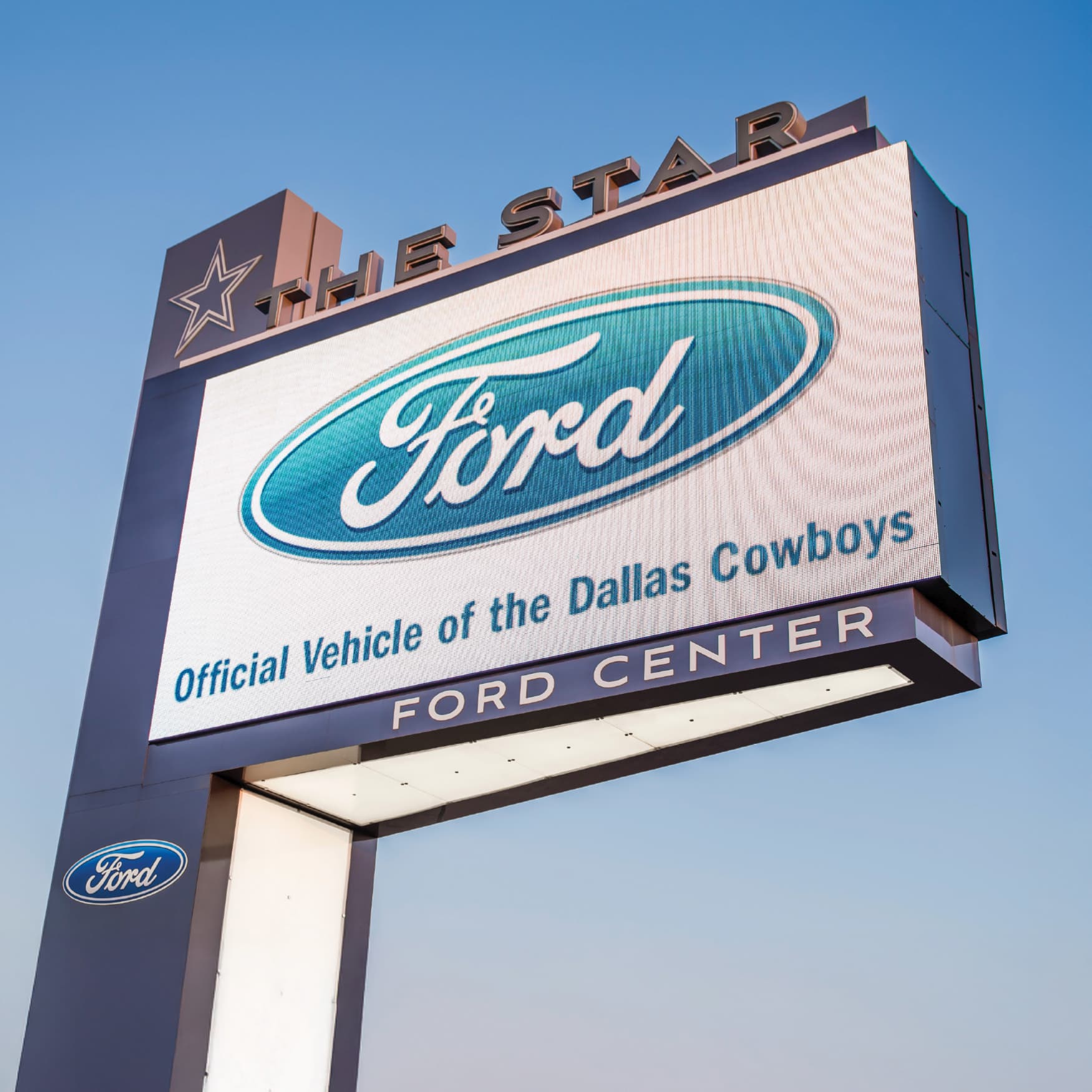
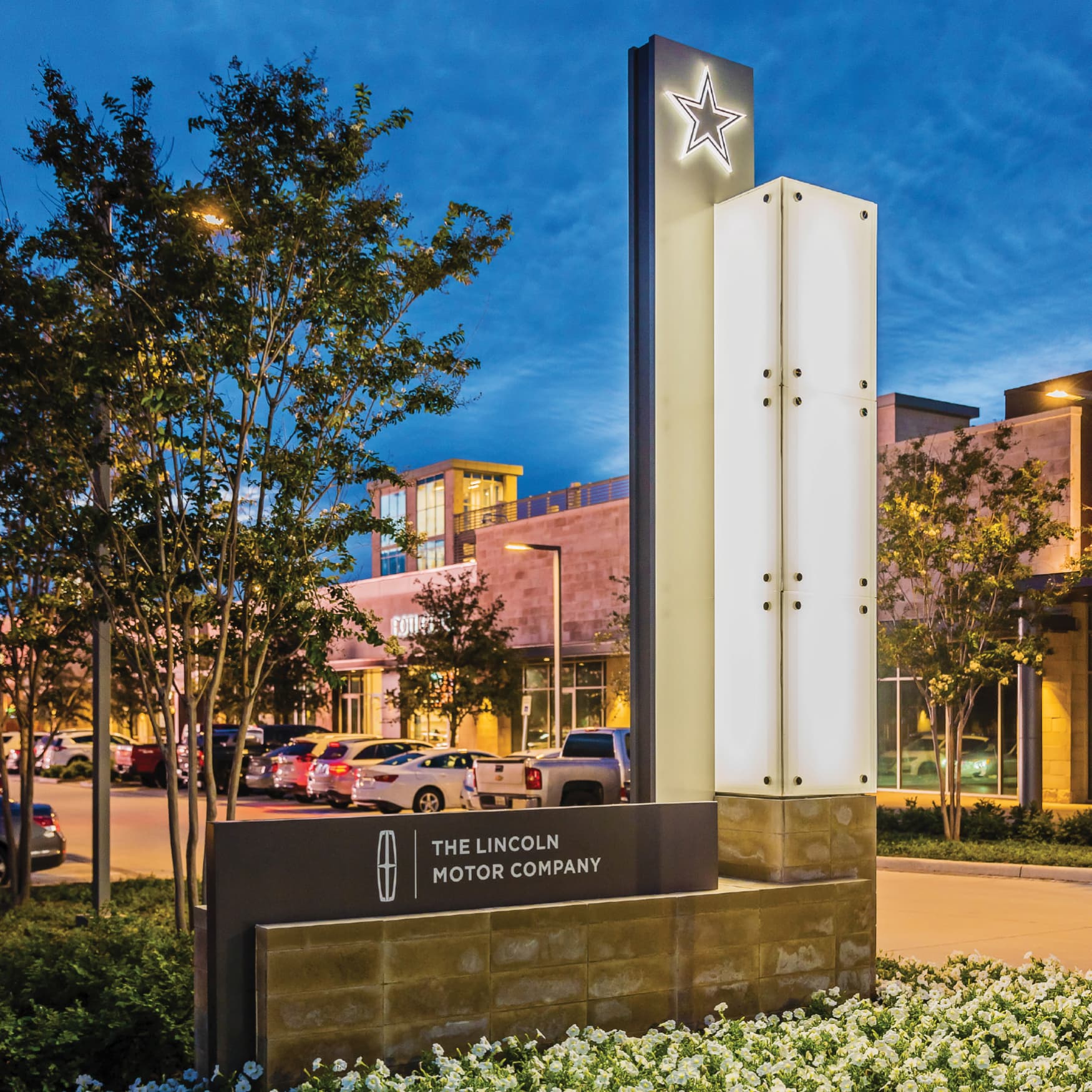
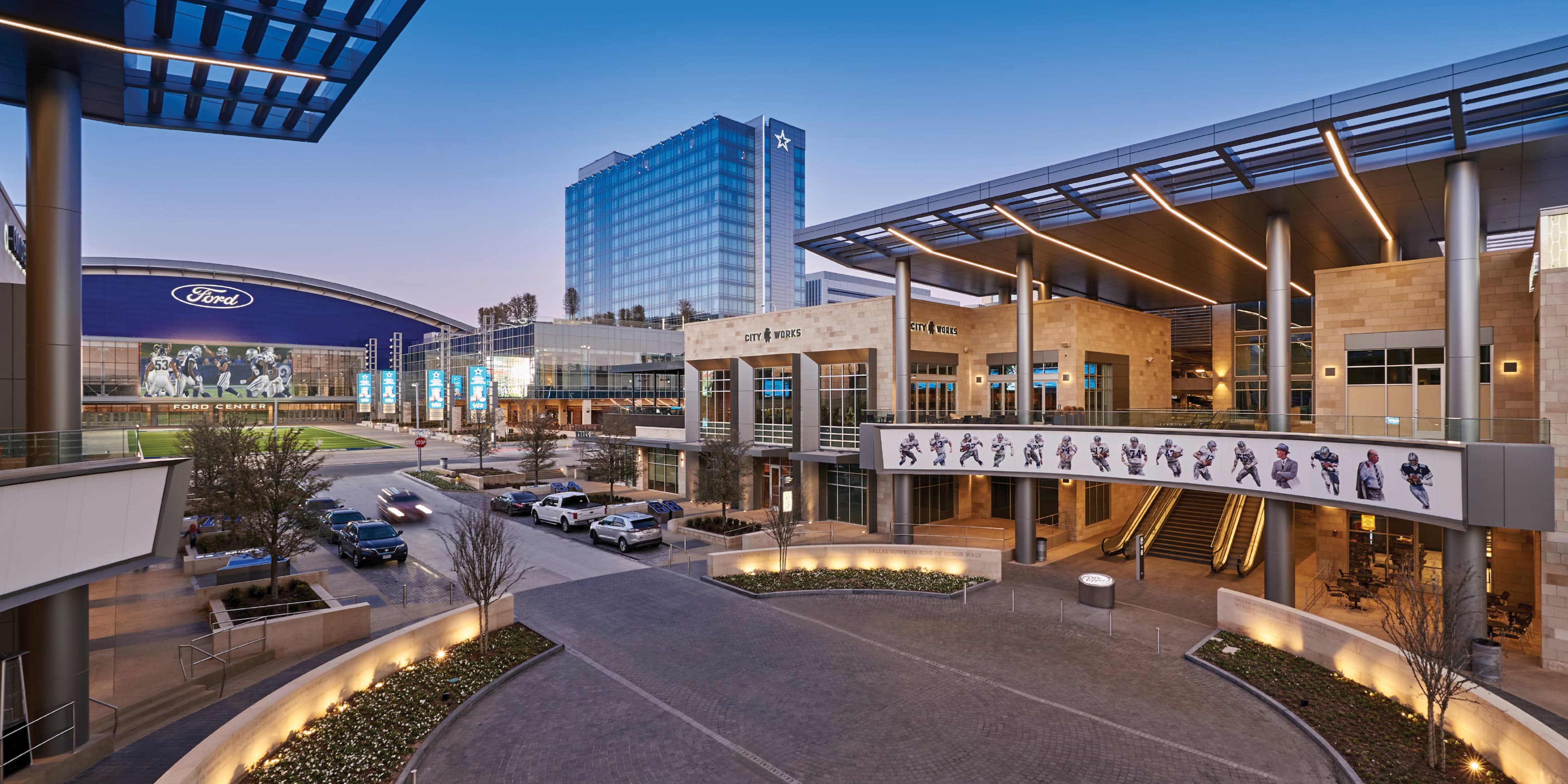
The Star: Home of the Dallas Cowboys, Dallas, TX
Working on a soccer training facility is a different brief than a stadium. It’s less about spectacle and more about performance. What’s the design language of a space like that?
ZB: A training facility requires a fundamentally different mindset than a stadium. Where a stadium is designed to amplify emotion and move tens of thousands of fans efficiently, a training facility is built around preparation, performance, and routine. The design language becomes quieter and more intentional, serving athletes, coaches, parents, and youth leagues rather than a massive crowd. Wayfinding should disappear into the background so people can stay focused on the experience, not on figuring out where they’re going. That’s not to say it lacks personality. The team identity can still be present, but it’s expressed in a way that reinforces community and culture over spectacle.
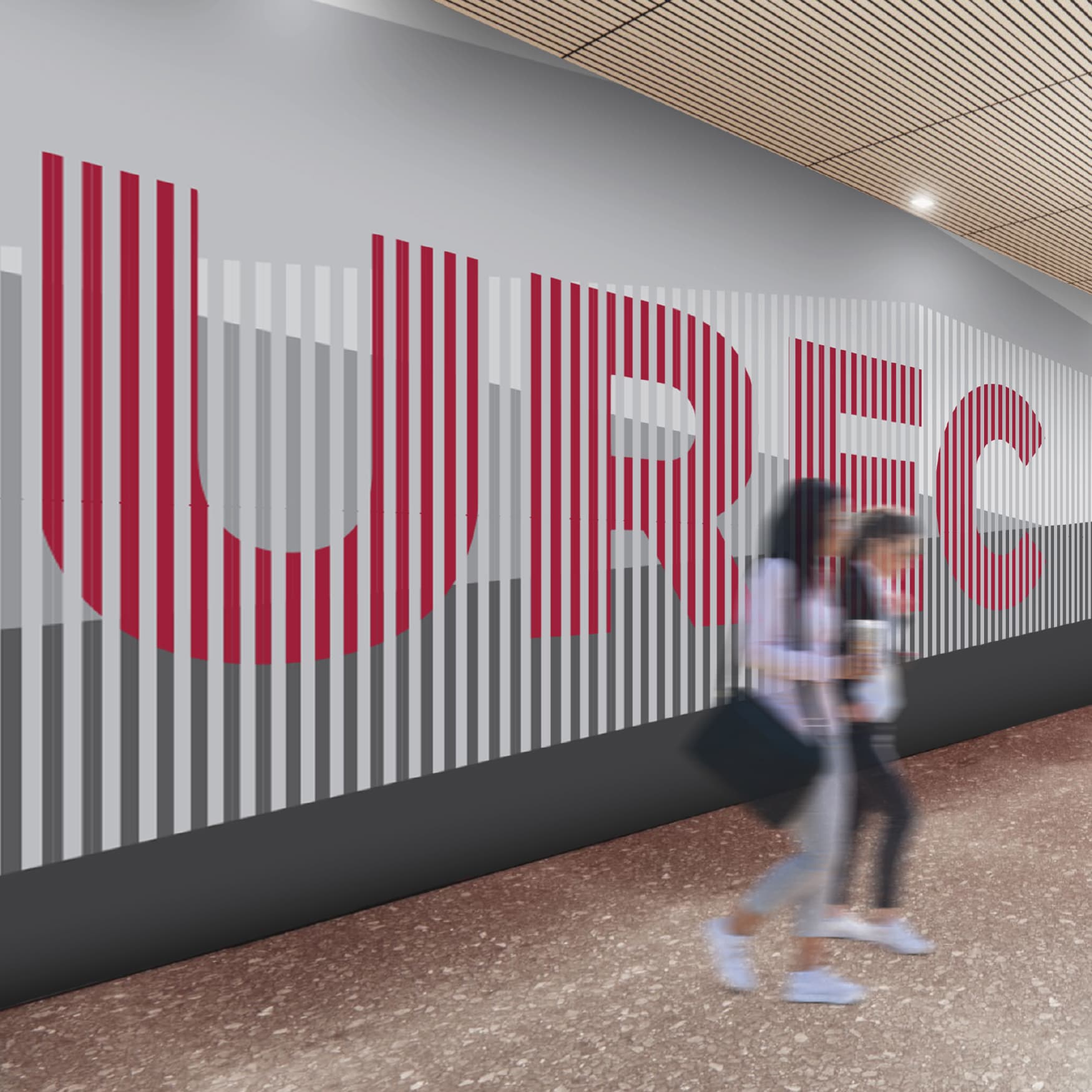
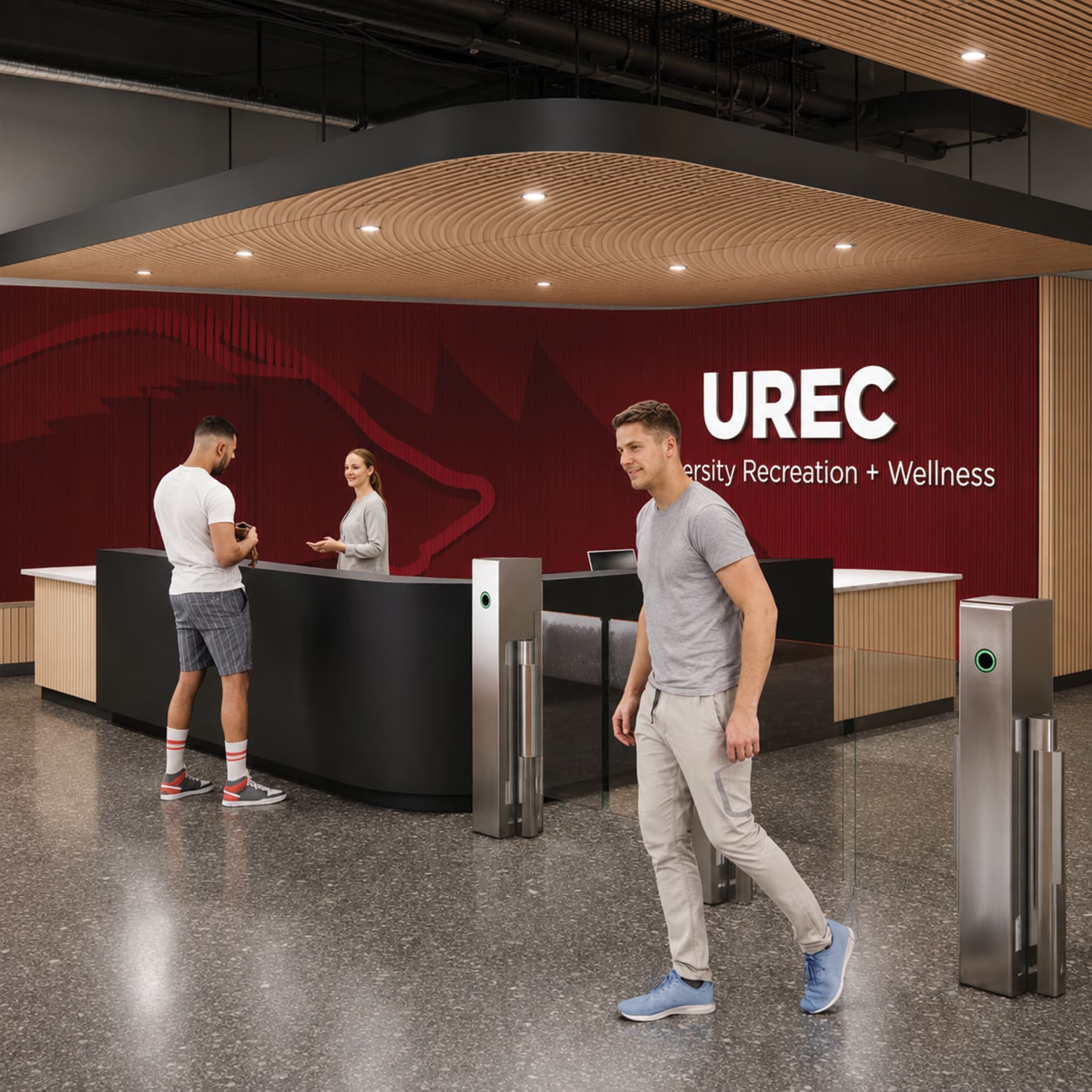
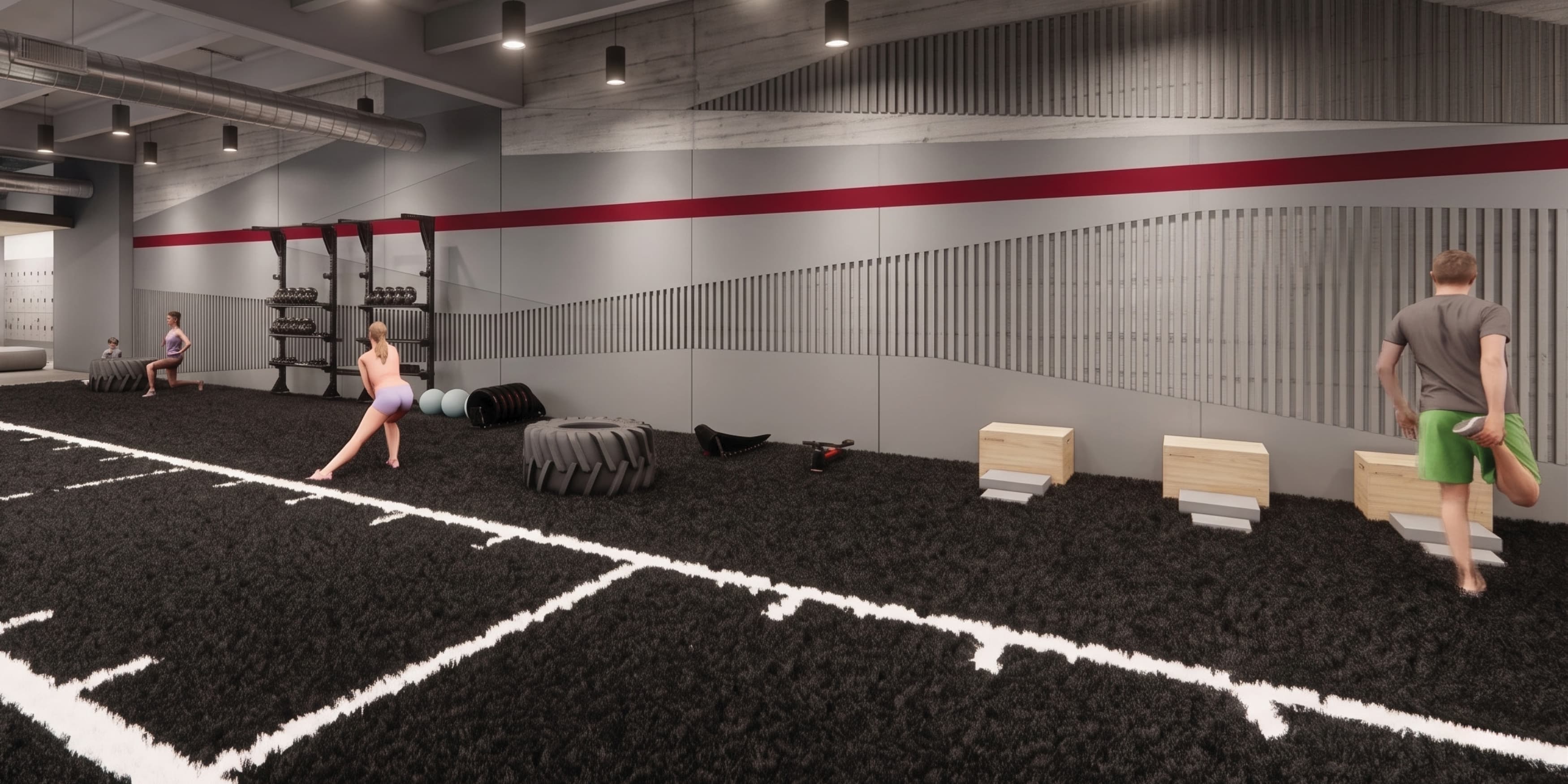
University of Arkansas, University Recreation + Wellness Building, Fayetteville, AR
Looking across your sports and entertainment projects, what has surprised you most about how people actually use and experience those spaces once they’re built?
HM: The best signage in a high-volume environment is often signage people don’t remember. That sounds counterintuitive, but when wayfinding is working, it gets people where they need to go effortlessly and without friction. If the wayfinding didn’t work, people would remember it because they’d be frustrated. Certainty is the number one priority. There’s a time and place for personality in environmental graphics, but sometimes wayfinding just needs to be about information and movement.
ZB: It’s easy to think of wayfinding as simply providing directions, but it’s really about reducing uncertainty. When people know where they’re going without having to stop and think about it, they stay engaged in the experience, whether that’s the game, a concert, or just moving through the space. Strong design removes the anxiety and invites people to be fully present.
KR: People will create their own paths when they’re leaving a venue, whether it’s intended or not. Flexibility in the signage system has to account for that. At the Cotton Bowl Stadium, the escalators reverse direction on the way out, which changes how signs are read entirely. And at The Star, home of the Dallas Cowboys, we explored whether signs could pay for themselves through sponsorship, which added another layer of flexibility to how those systems were designed. These projects are layered in ways that keep surprising you.
HM: Arriving at a venue and departing are completely different experiences from a wayfinding standpoint. On the way in, people actively use the signage. On the way out, they follow the crowd and rarely need it at all. It’s a reminder that signage takes on different roles at different moments within a single event. The brand is the experience, and the experience is the brand. Those two things have to work together.
See more of RSM Design’s sports and entertainment projects ›