A Mind in Motion: Emotional Journey Maps
Posted July 08, 2026 · Education
BY MARTIN SCHWARTZ, FOUNDING PRINCIPAL
“Between stimulus and response there is a space. In that space is our power to choose our response. In our response lies our growth and freedom.”
— Viktor Frankl
Lead With the Eye, Connect With the Heart
The most powerful force in design is not what a space contains, but what it makes people feel. The word Viktor Frankl uses to describe this relationship is “space.” Distinct from a “gap” or a “pause,” this space does not imply an emptiness or a lack but suggests the presence of something bigger, an immense and potential power. This energetic space between stimulus and response is where human experience lives, waiting to emerge and take shape. At its most tangible, space becomes the canvas through which designers continually reimagine possibility.
Consider how a film moves an audience to connect with their emotions; a skilled director does not leave this to chance. Context established in the very first scene lays the artistic groundwork that shapes mood, atmosphere, tone and setting. From there the plot continues to build and evolve, with unexpected turns in the story, and character development; each scene is intentionally crafted to evoke a feeling at a specific moment in the film. These touchpoints bring the audience to experience a visceral and emotional response as the story unfolds.
In design, the guest journey presents itself in a similar way: each touchpoint along a person’s path through a space is an opportunity to choreograph feelings and emotions, what they notice, and what they carry with them when they leave. Designers, like filmmakers, transform the stimulus and response of sensory perception and emotion. Bridging the space between the built environment and the internal user experience is at the heart of this creative challenge. Cognitive and user journey mapping operates as an important framework for understanding and choreographing how people navigate. Discovering the brain’s mapping process, specifically how it orients itself in the built environment, allows designers to lay the foundations for meaningful emotional experiences.
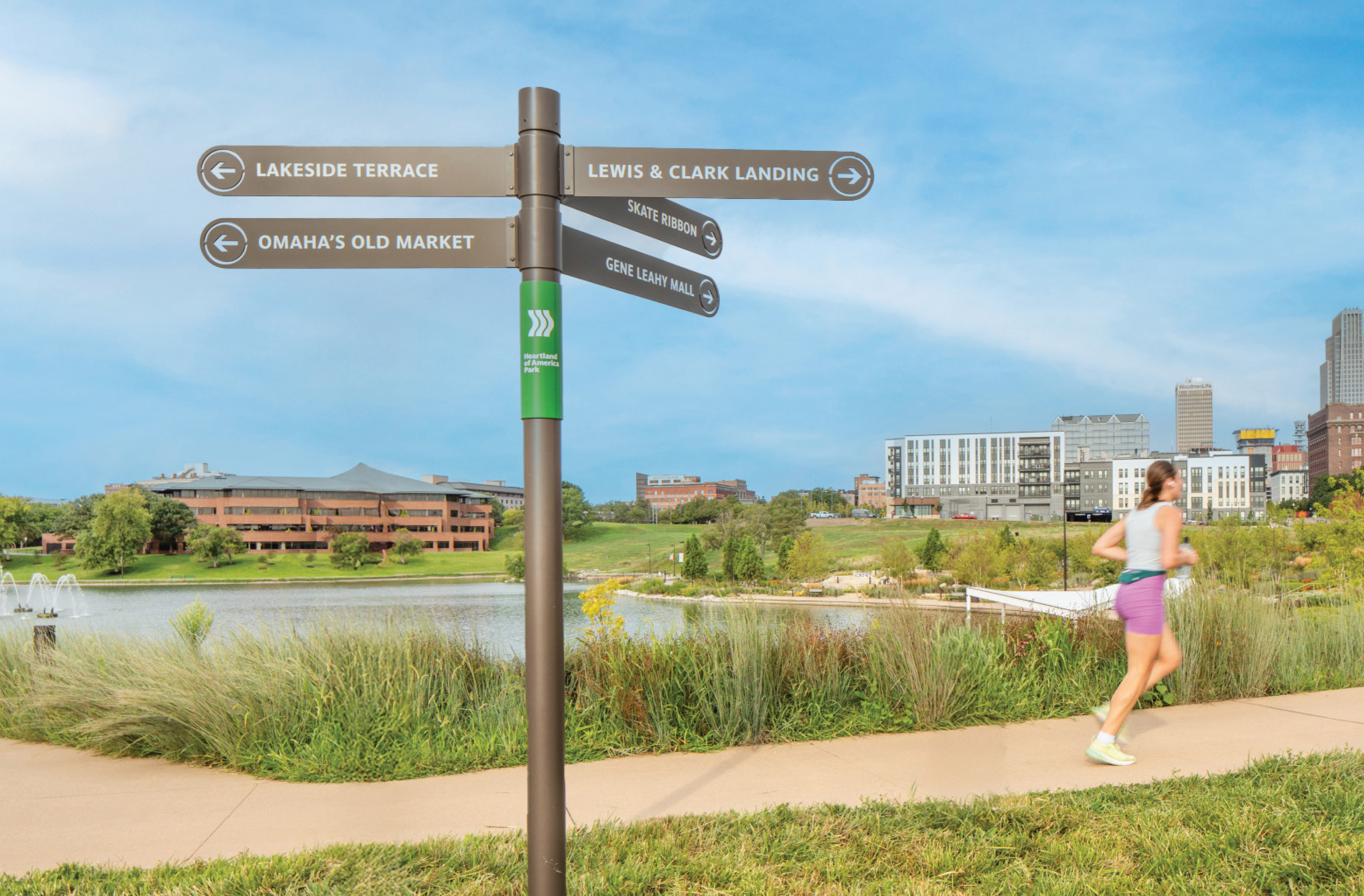
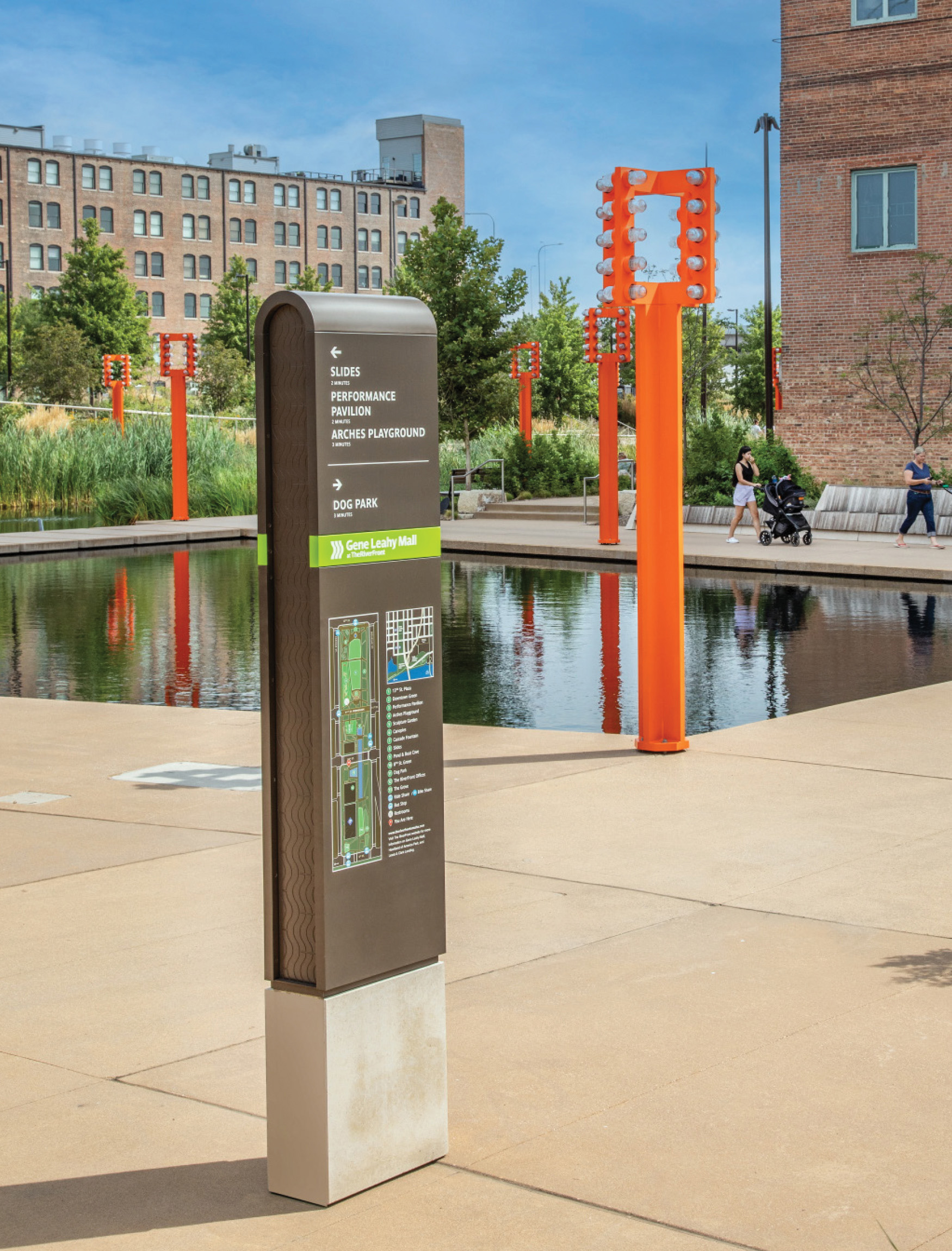
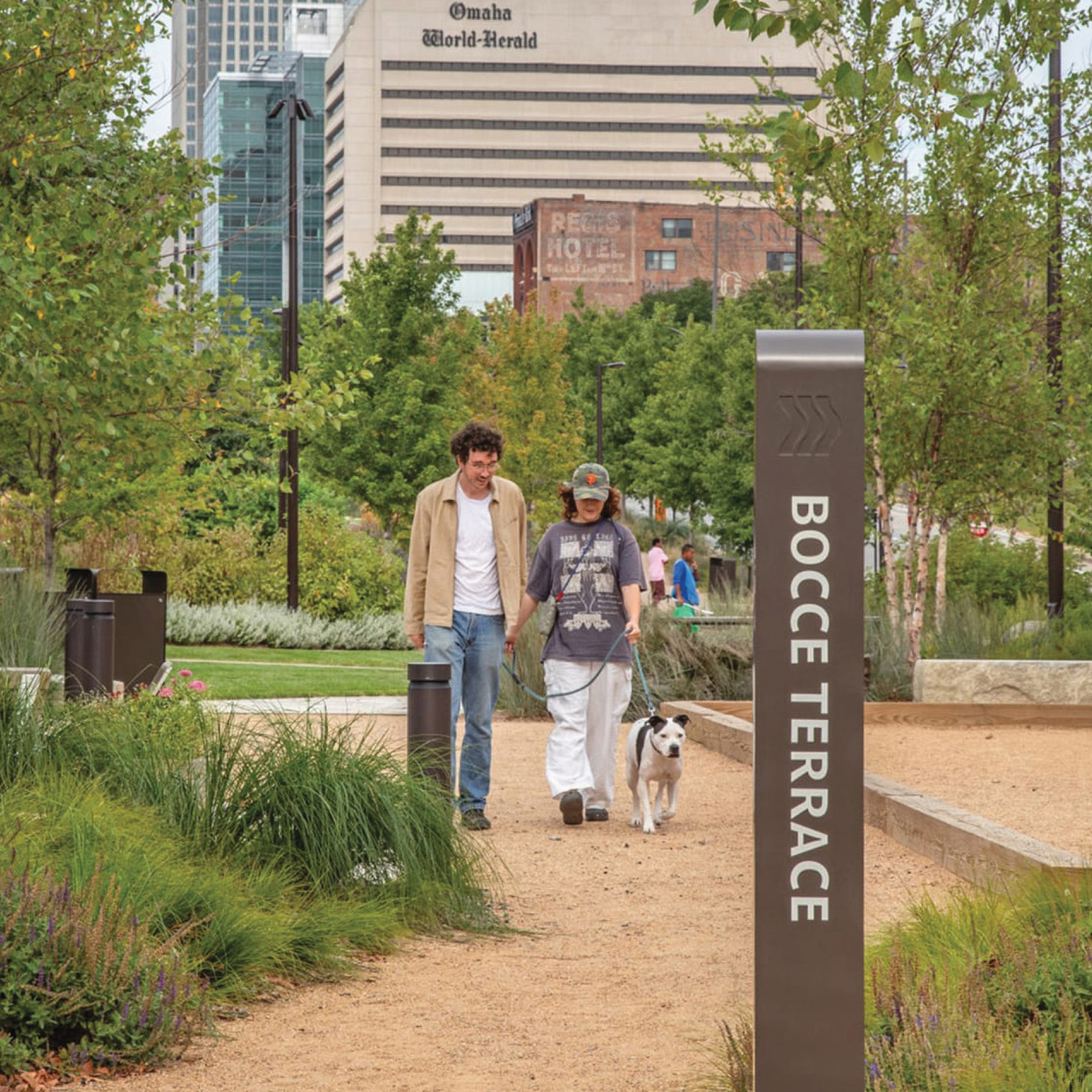
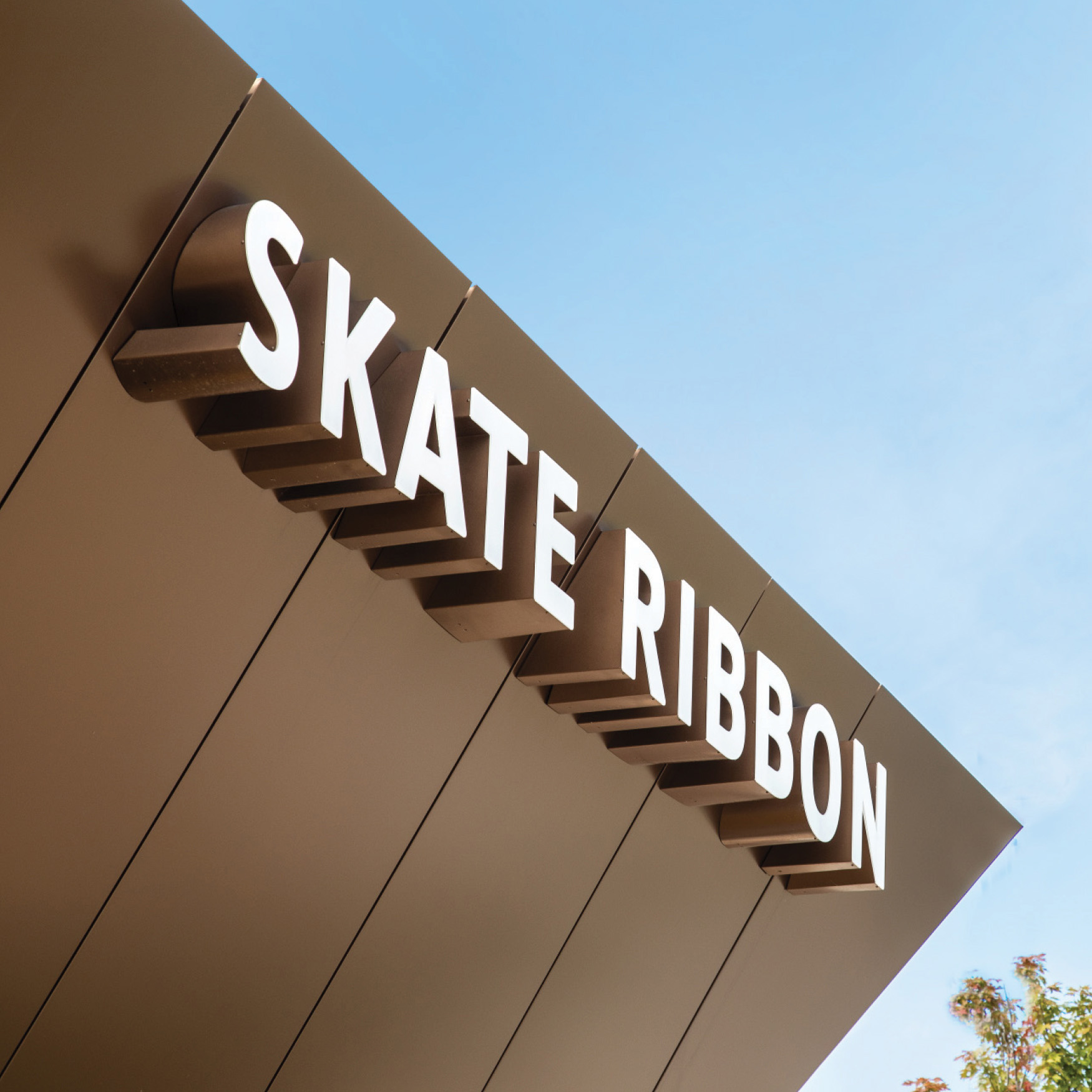
Omaha Riverfront, Omaha, NB
The Four Intelligences in the Built Environment
Cognitive clarity and mapping are just a few of the many dimensions of a complete user experience. The broader picture of holistic solutions, and perhaps one of the deepest ambitions of design overall, involves focusing on how people respond emotionally to the places they engage with.
Design that engages the whole person draws on the four human intelligences that support connections between people and the built environment. Cognitive intelligence (IQ) is the rational processing of understanding the environment, how it informs us as to where we are, and where we should go. Emotional Intelligence (EQ) shapes the conditions for belonging and connection, designing spaces that invite people to pause, gather, and share in a collective sense of delight. Physical intelligence (PQ) is the body’s experience of moving through, discovering, and inhabiting a place. And ultimately, spiritual intelligence (SQ) reveals the meaning and purpose that empowers and helps manifest the first three intelligences.
RSM Design’s practice embraces all four parts of the human experience. Wayfinding addresses physical intelligence by choreographing how people move, where to pause, and what to discover along the way. Brand narrative and story engage spiritual intelligence (SQ), uncovering a project’s unique meaning, purpose, and voice. Logos and visual identity systems connect back to that story, giving it form and presence. From that foundation, emotional intelligence (EQ) takes shape, translating the brand’s deeper purpose into a felt experience that communicates what kind of place people are entering, how it reflects their values, and why it resonates with them. Experience design, which includes public art and placemaking, sits at the intersection of EQ and PQ, choreographing the emotional experience of place while simultaneously anchoring navigation and inviting deeper exploration. Together, these intelligences inform the user journey as people map and move through spaces. SQ is what elevates that journey from navigation to meaning, empowering people not just to find their way, but also to discover a deeper sense of belonging and purpose in the environment.
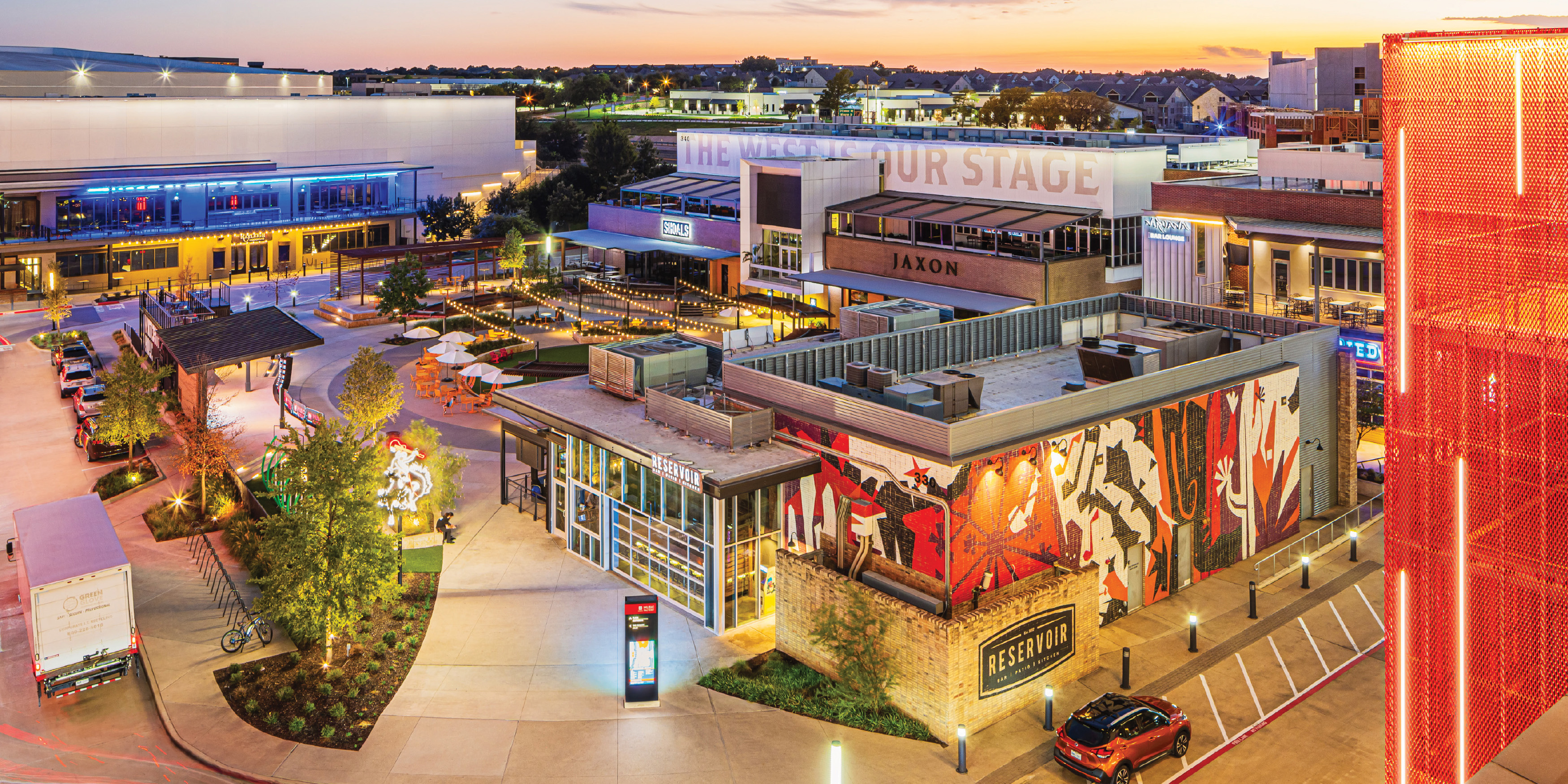
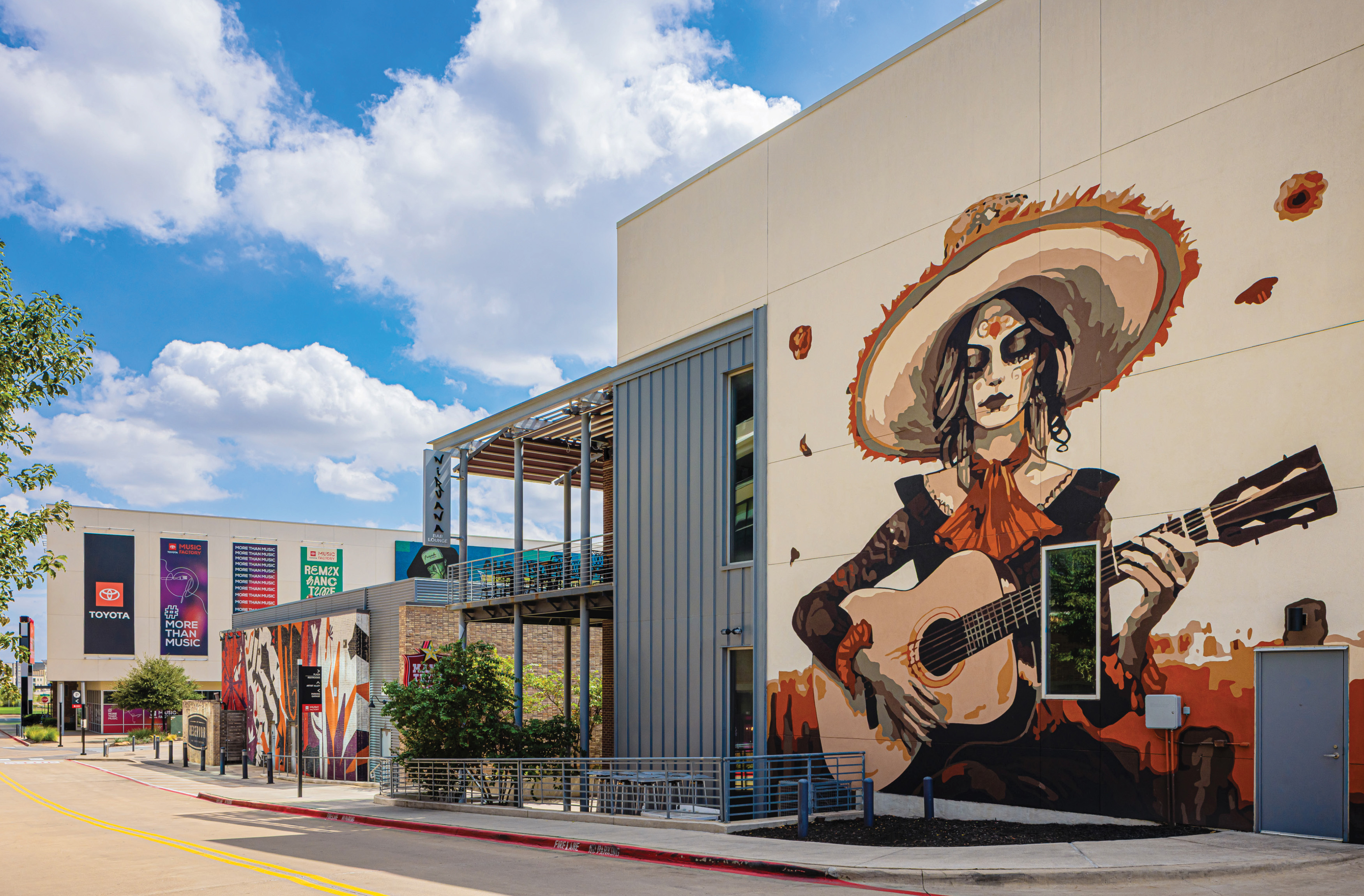
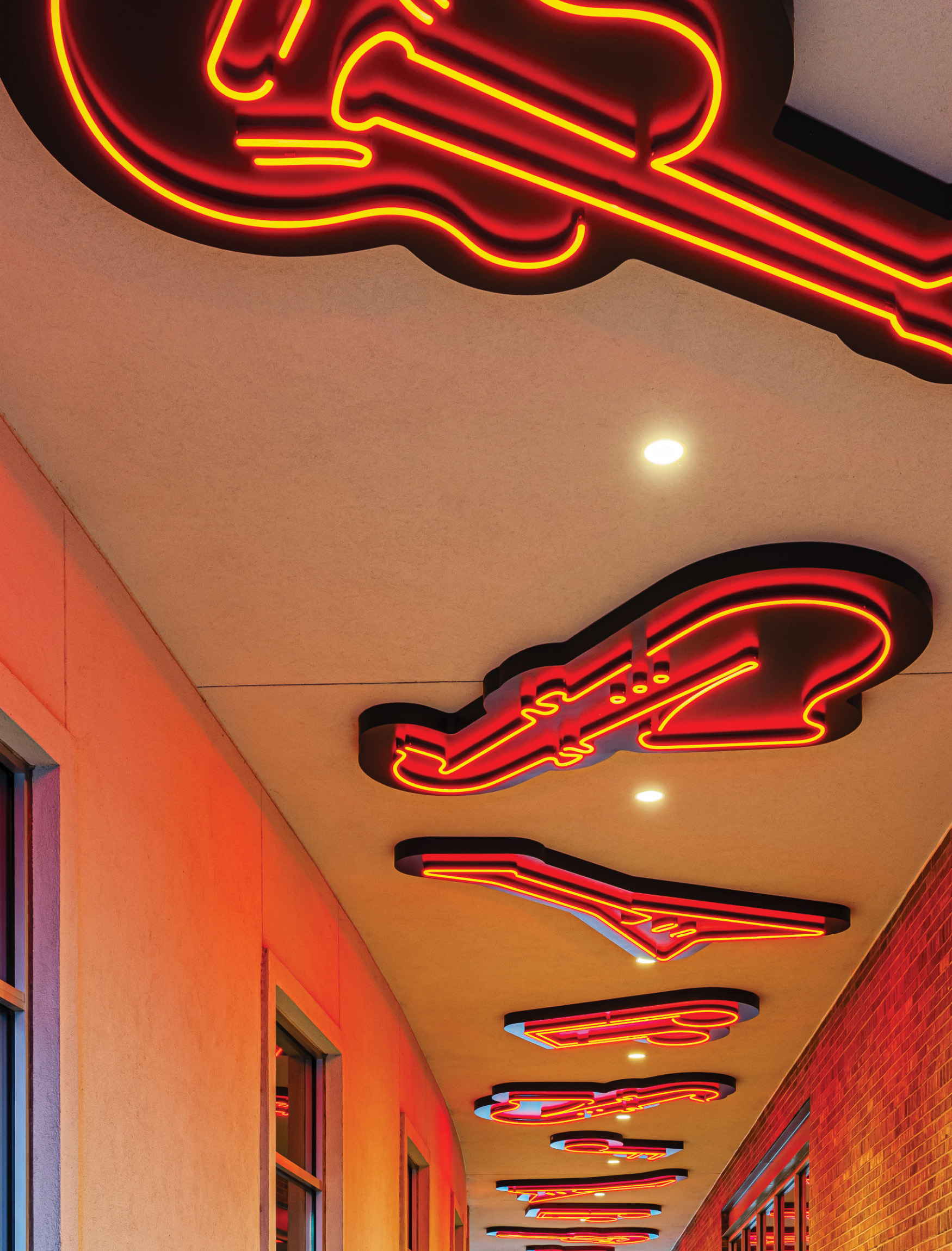
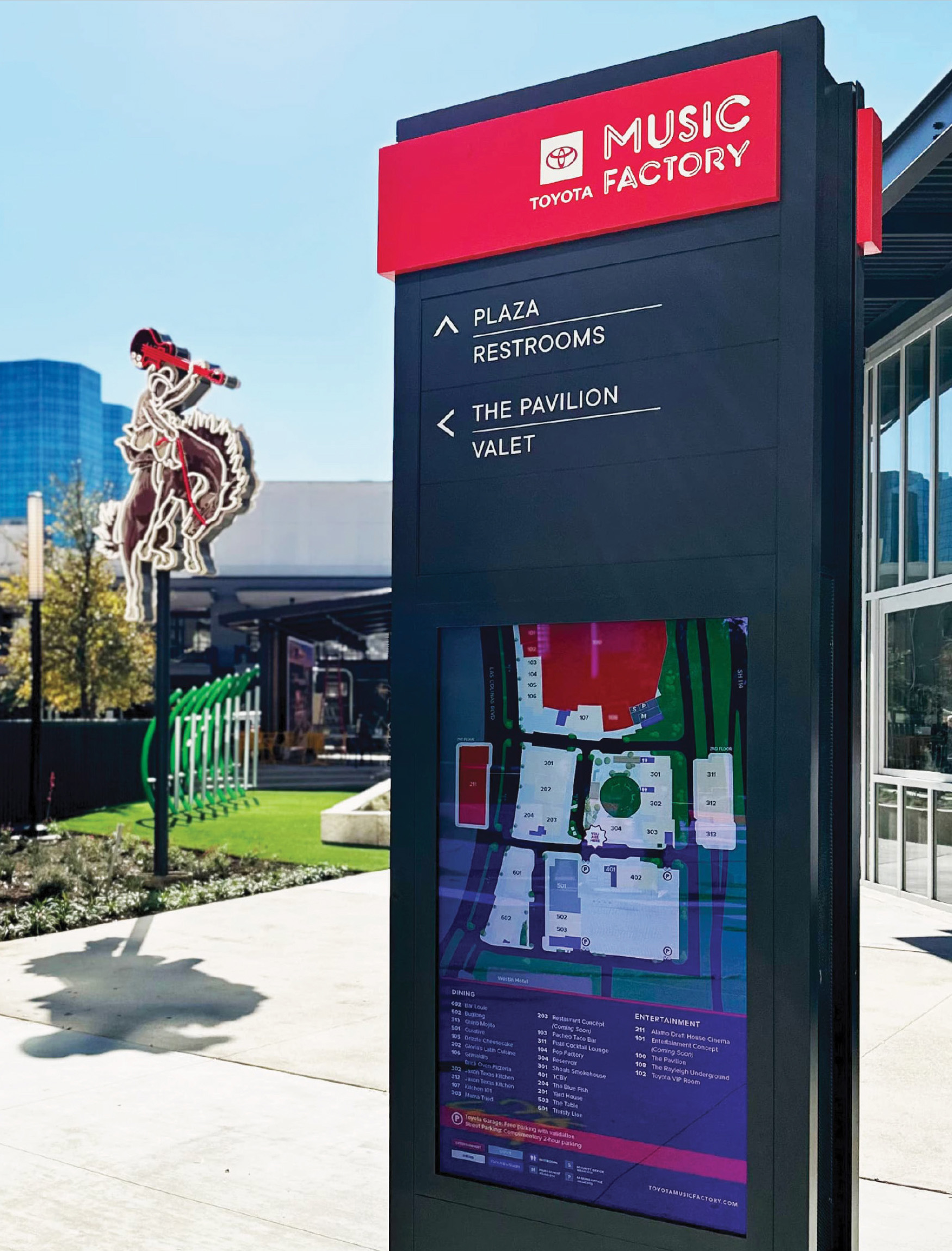
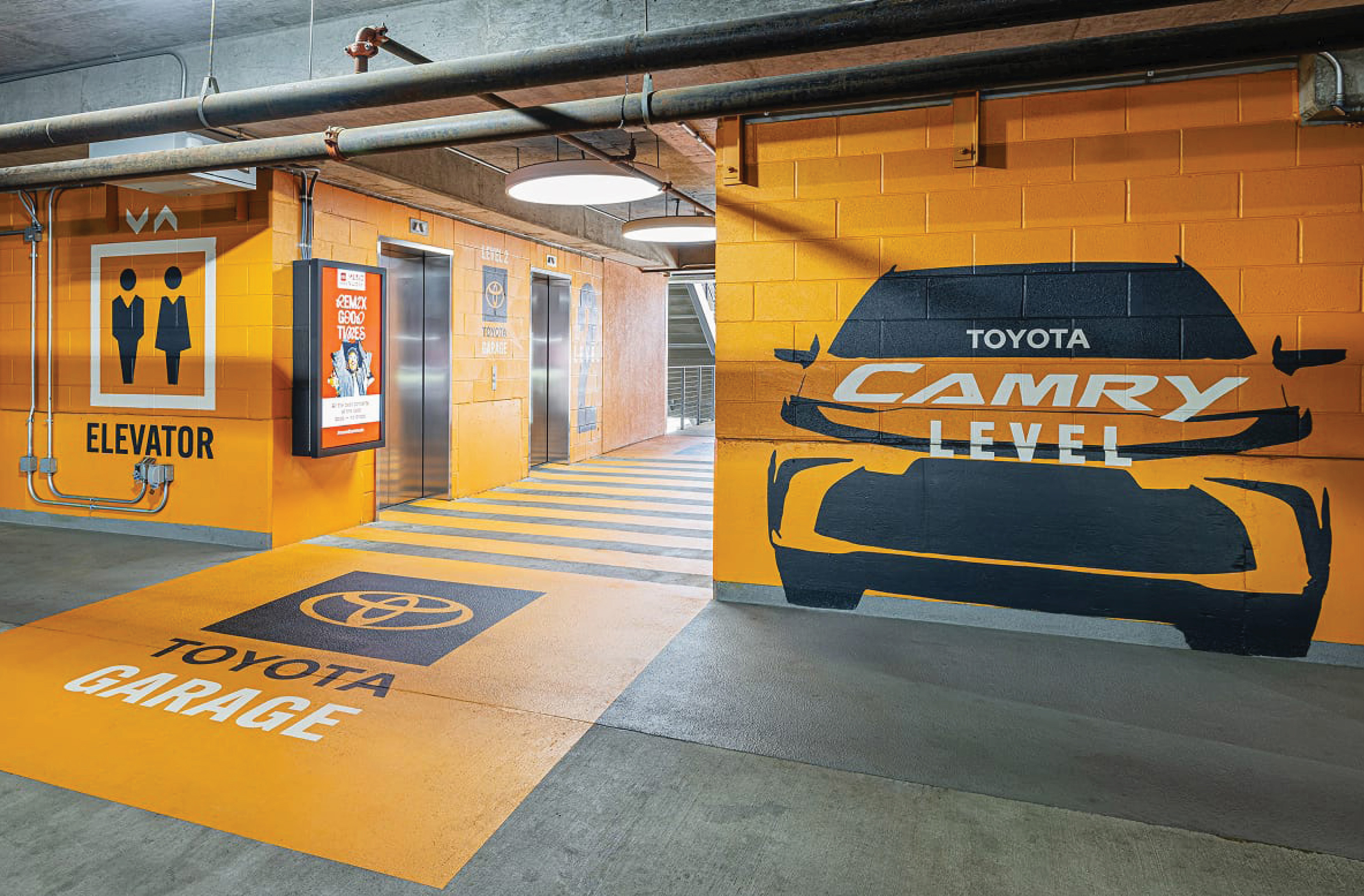
Toyota Music Factory, Irving, TX
Branding as Emotional Orientation
As a visitor enters a place, it has already communicated important messaging by way of its brand. Materials, colorways, forms, and fonts each transmit information about the value of a place and the audience it is intended to serve, contributing to each users’ assessment of a space from the moment they arrive. At its most powerful, this first impression conveys the totality of a place’s mission and draws guests into the experience.
RSM Design approaches brand identity as the visual essence of what a place represents. For example, a logo is not decoration but embodies the distillation of a place’s character into a single, recognizable form. A branded environment is the three-dimensional expression of a set of values that visitors read and respond to emotionally before forming conscious judgements. When branding is both thoughtful and cohesive, it produces a felt sense of belonging and a confidence that a person is where they need to be.
Public Art as Emotional Navigation
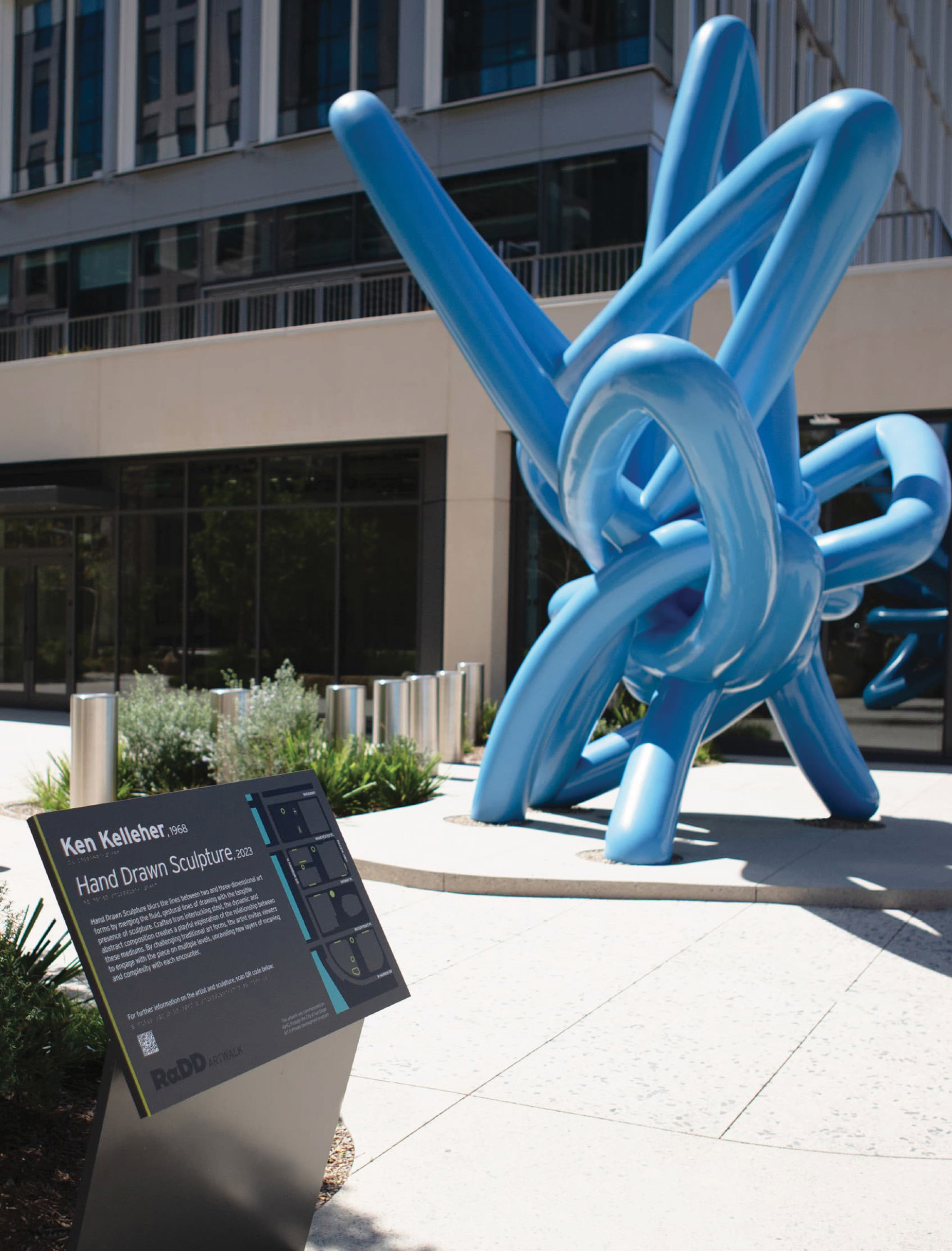
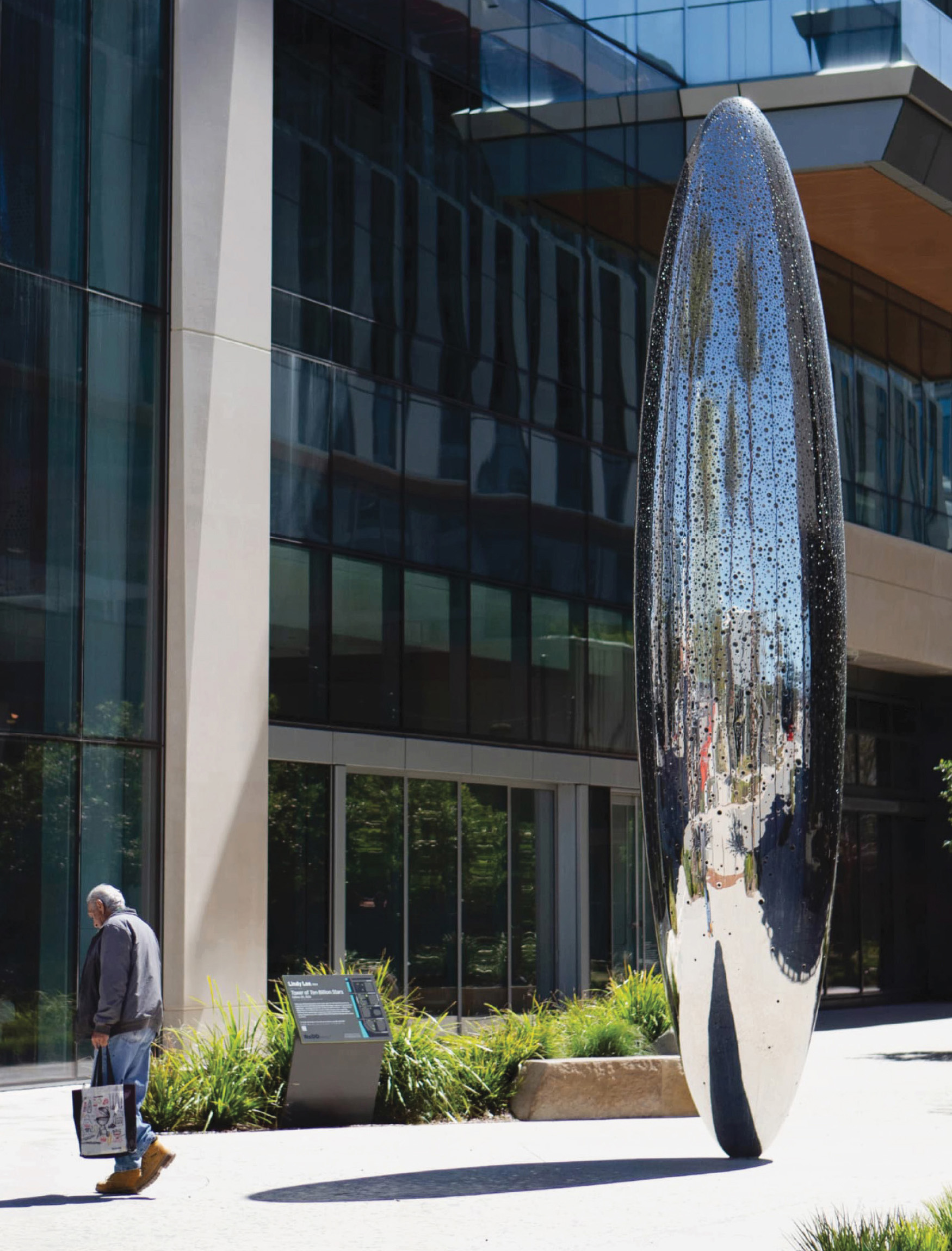
Art in the built environment performs two functions simultaneously. The first is obvious: on a material level, art works to create moments of delight, meaning, and emotional resonance. The second is less commonly acknowledged: art also functions as a navigational system. A mural at a corridor junction is not just an aesthetic gesture; it is a landmark, a reference point, and a memory anchor. Art engages emotional memory in a meaningful way, sometimes even more so than traditional signage.
Beyond its role as an anchor in space, public art can be a powerful tool for a designer in shaping the emotional arc of a guest’s journey. Each installation embedded in an environment strikes a deliberately timed chord in the larger emotional composition of the space, thoughtfully positioned to evoke a specific mood, energy, or feeling that supports the guest’s overall experience.
This is the principle that RSM Design’s placemaking work is built on: delight is not only decorative, but can play an important functional role as well. An unexpected moment of color, texture, or narrative embedded in an environment gives people something to orient by, a landmark that registers not just spatially but emotionally as well.
Wayfinding as Physical Choreography
Where branding and art address the emotional and narrative experience of a space, wayfinding addresses the innate need to explore, discover, and engage with the surroundings. Wayfinding represents a physical choreography that guides movement, enables discovery, and resolves uncertainty as the user journey continues to unfold.
What is less often less discussed is how deeply wayfinding shapes emotional experience. Experiencing a new environment can bring with it confusion and uncertainty, whereas navigational clarity inspires confidence and empowerment. The moment an environment decodes itself and the path forward becomes legible, something shifts emotionally as the guest is free to engage more presently with their surroundings.
Each wayfinding program serves as an overarching guide, including multiple design disciplines, architectural scales, signage elements, interiors, exteriors, and environmental graphics. These wayfinding initiatives ensure that each element of the built environment pulls in the same navigational direction, and contributes to a larger emotional trajectory; this choreography of experience can act as a piece of music, perhaps starting off slower and quieter before building towards a louder, more dynamic energy or rhythm. Design cues conduct both physical and emotional experiences to follow larger arcs that usher users toward moments of connection. When this orchestration works effectively, it disappears entirely, registering not as active instruction but as a subconscious feeling of safety, confidence, and ease.
The physical intelligence, activated by successful wayfinding, is closely related to what Kevin Lynch described in his research of The Image of The City: the experience of edges, paths, districts, nodes, and landmarks accumulating into a coherent internal map. RSM Design’s approach to wayfinding through these touchpoints is informed by that lineage; each project calls for a unique (and highly contextual) journey that’s seldom orchestrated the same way twice.
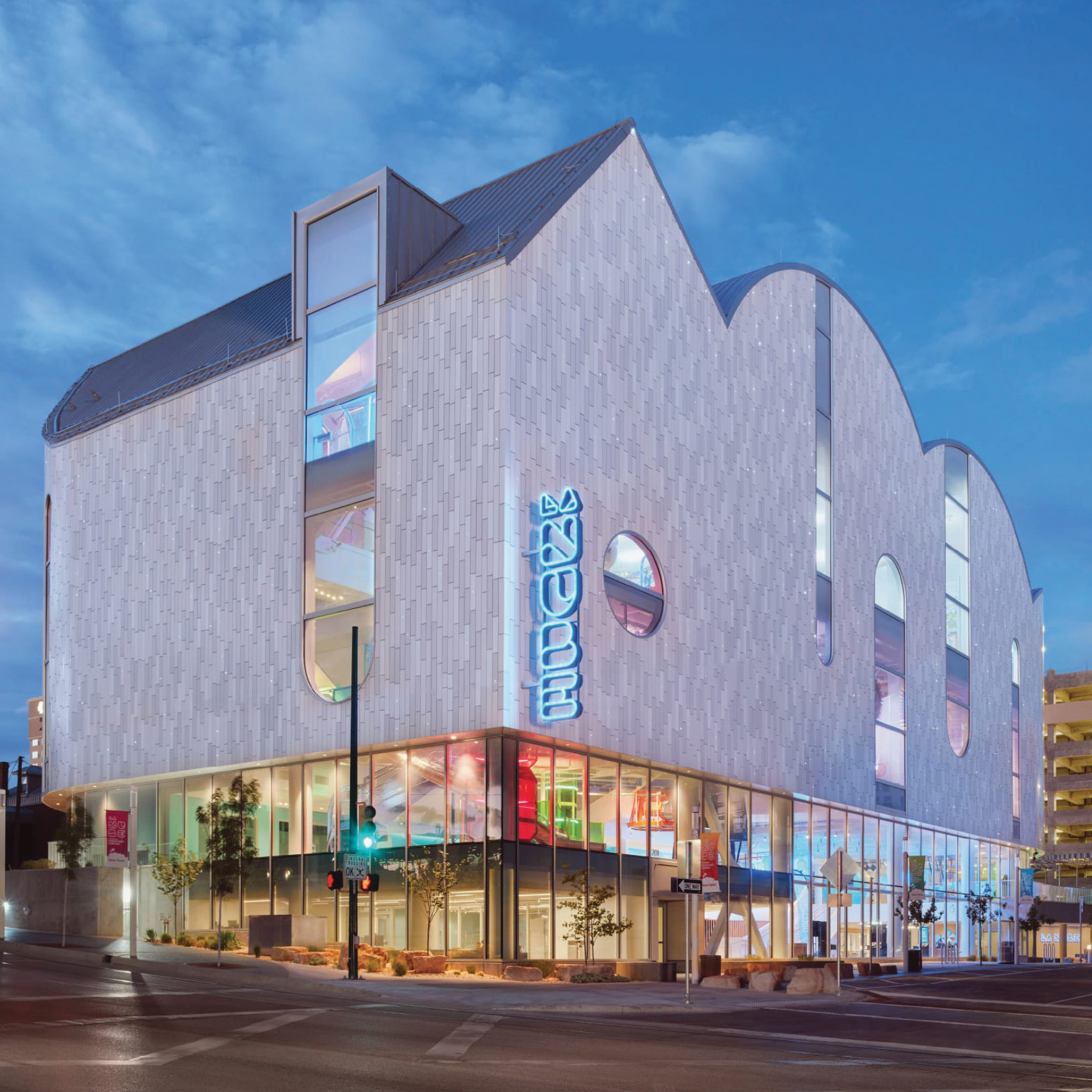
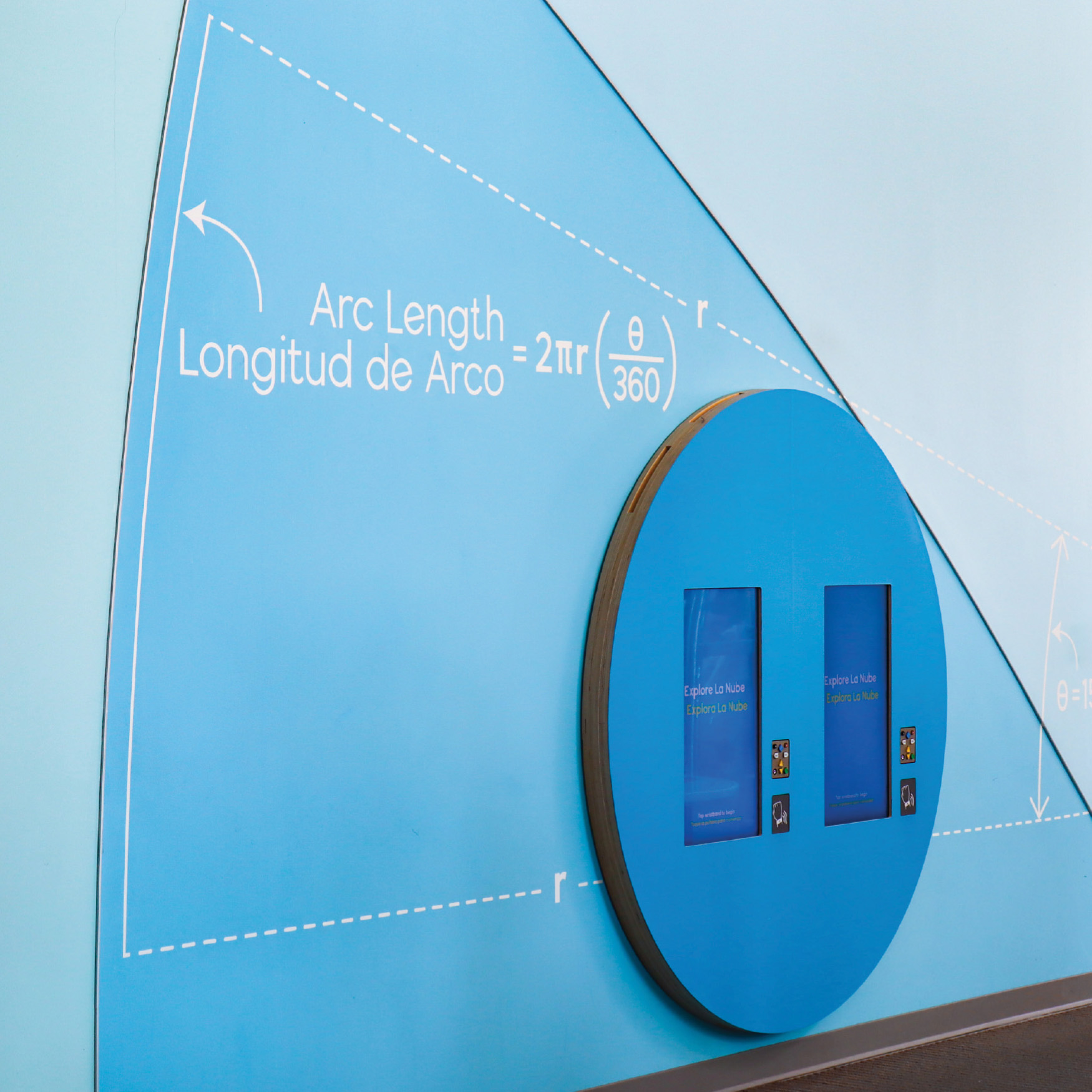
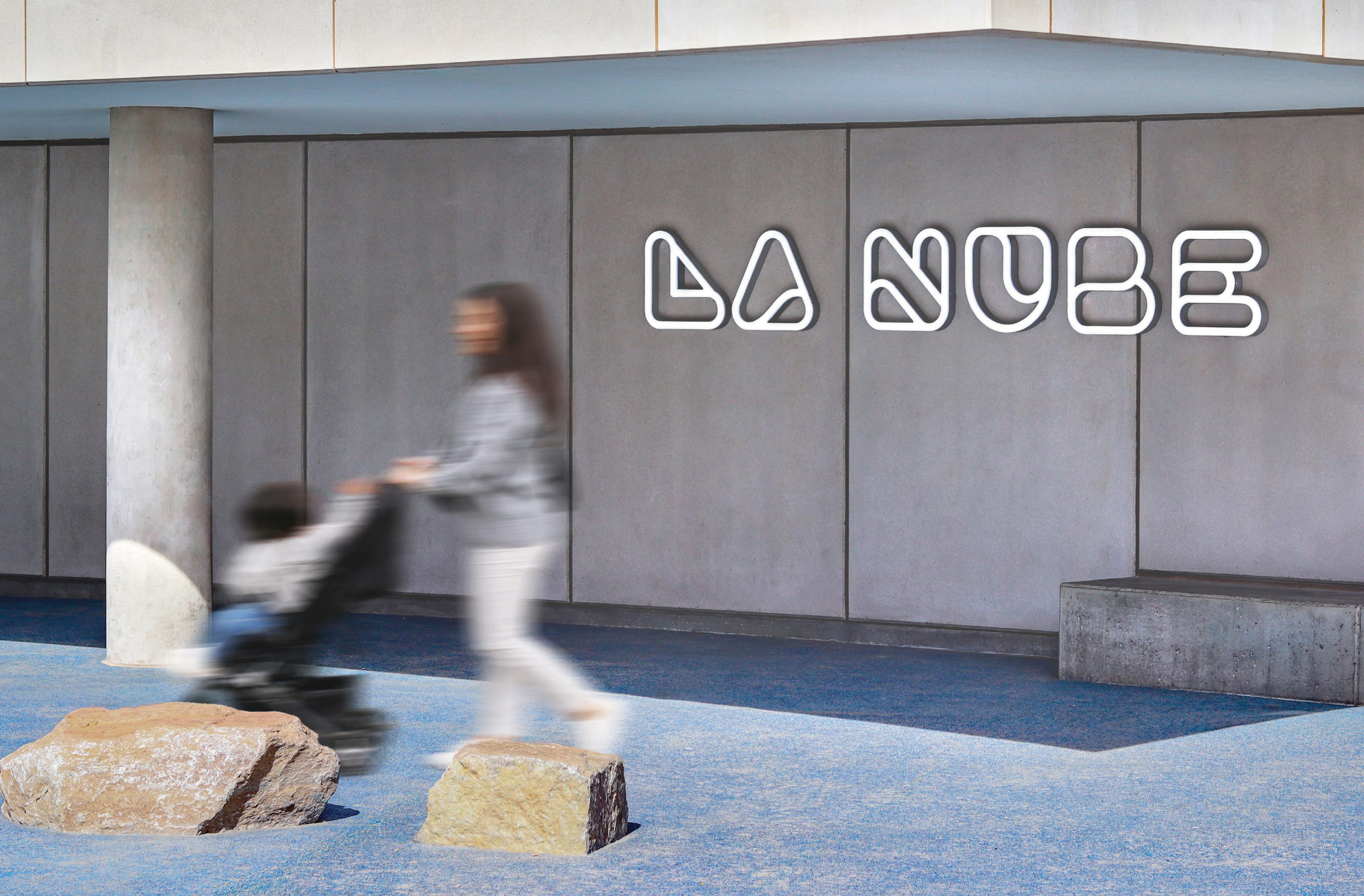
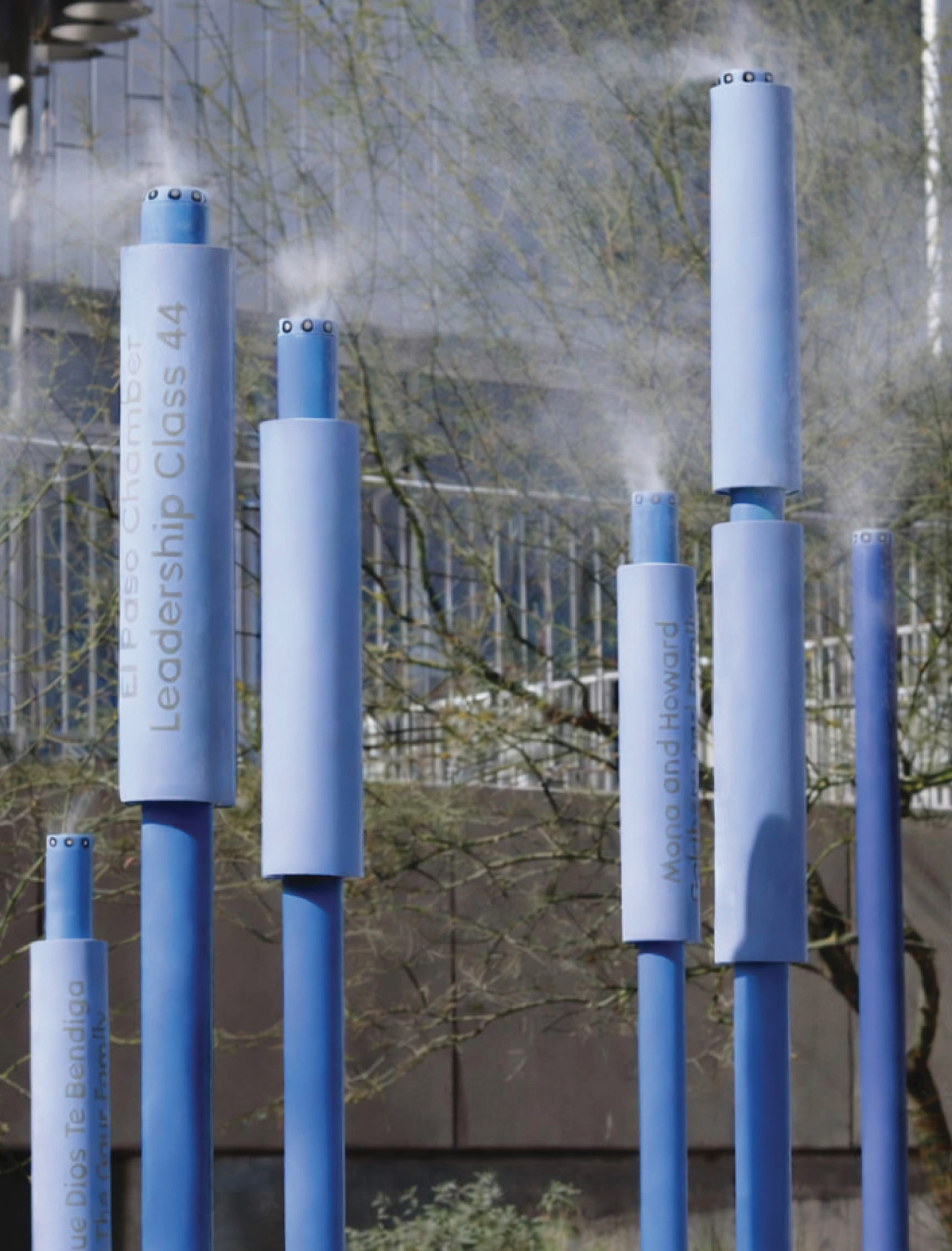
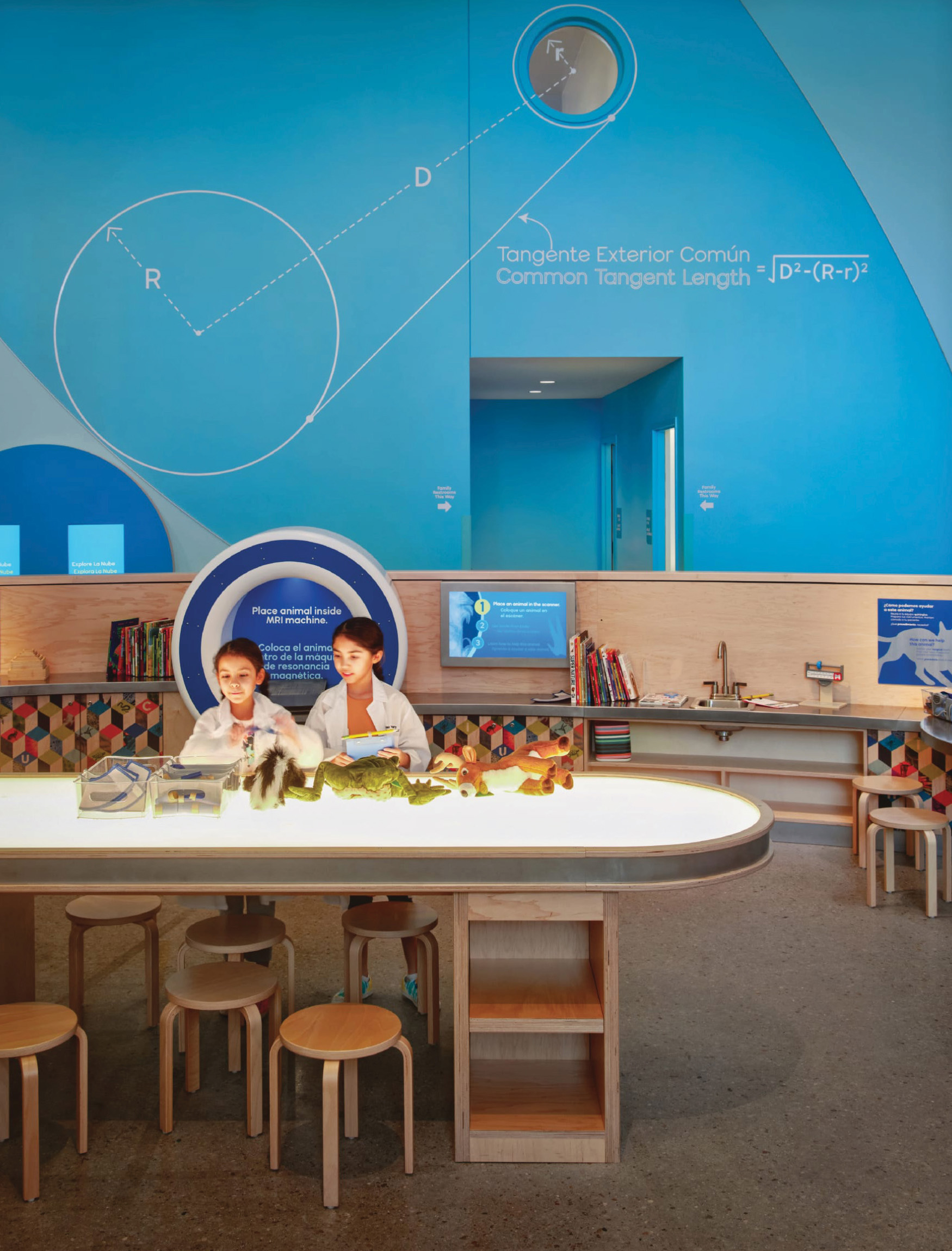
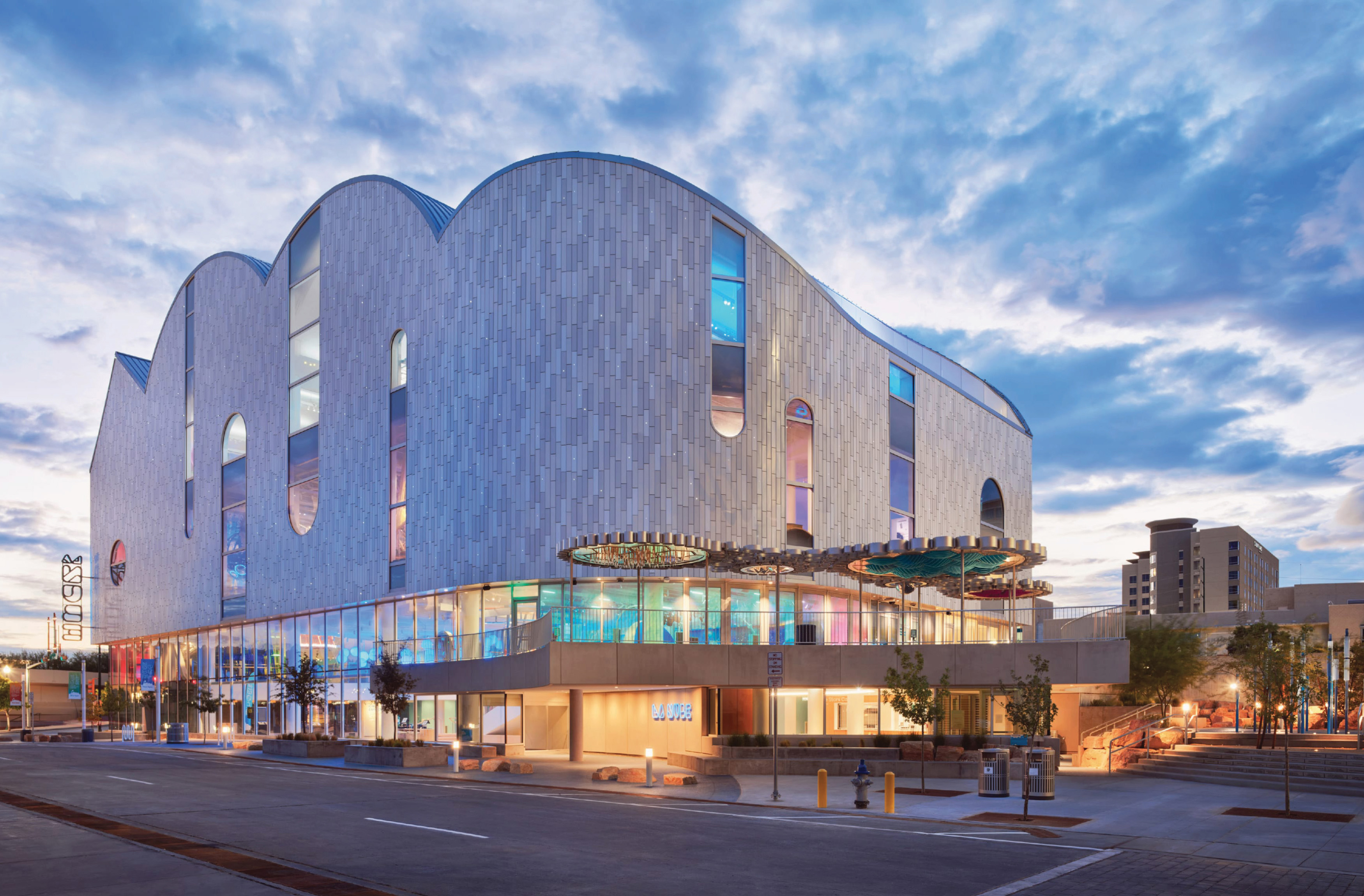
La Nube STEAM Discovery Center, El Paso, TX
Art, Navigation, and the RaDD Program
Together, wayfinding, public art, and cohesive branding form a strong foundation that guides and invites people deeper into a space, creating healthier and more emotionally enriching environments than any singular design element alone.
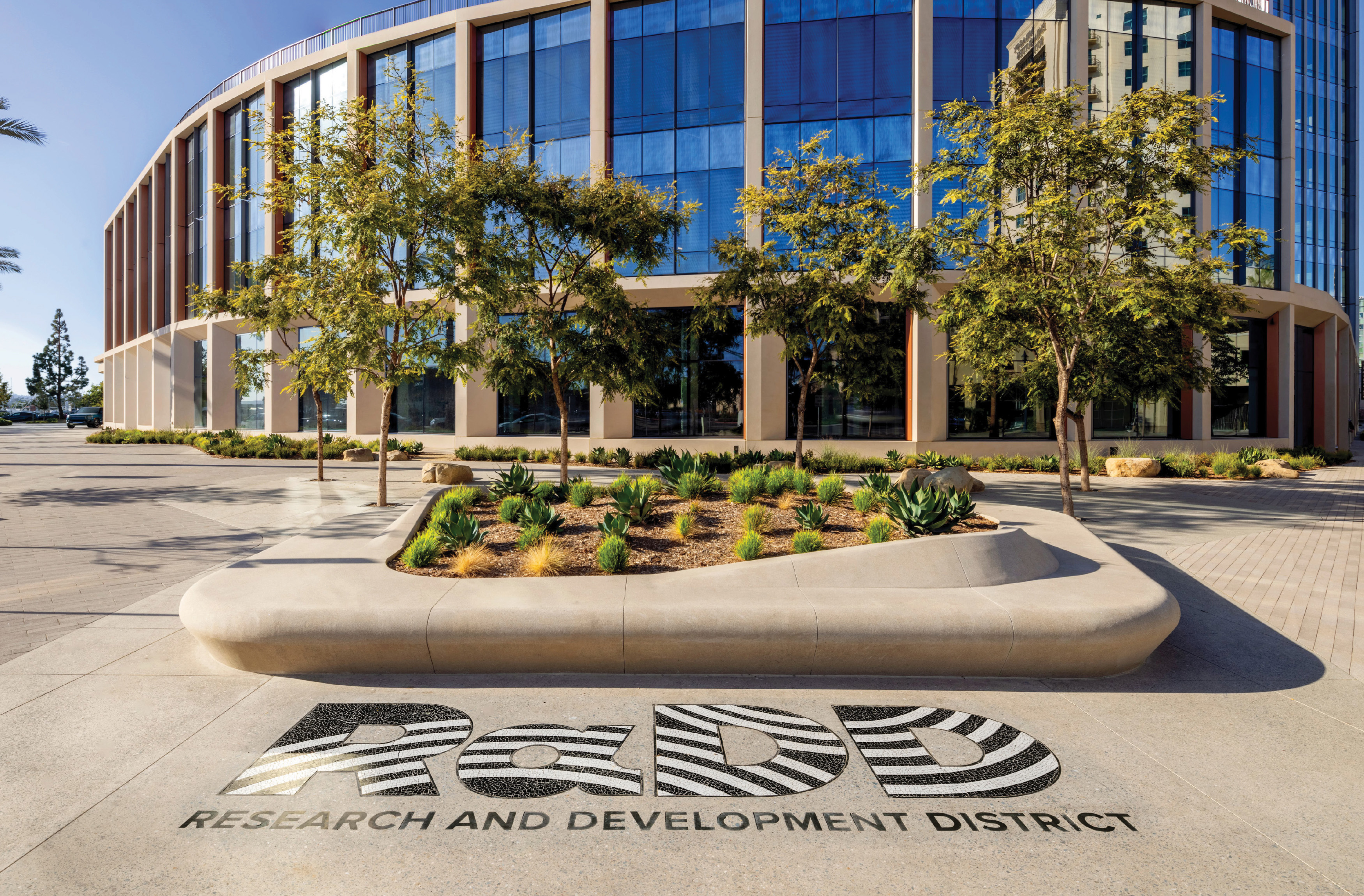
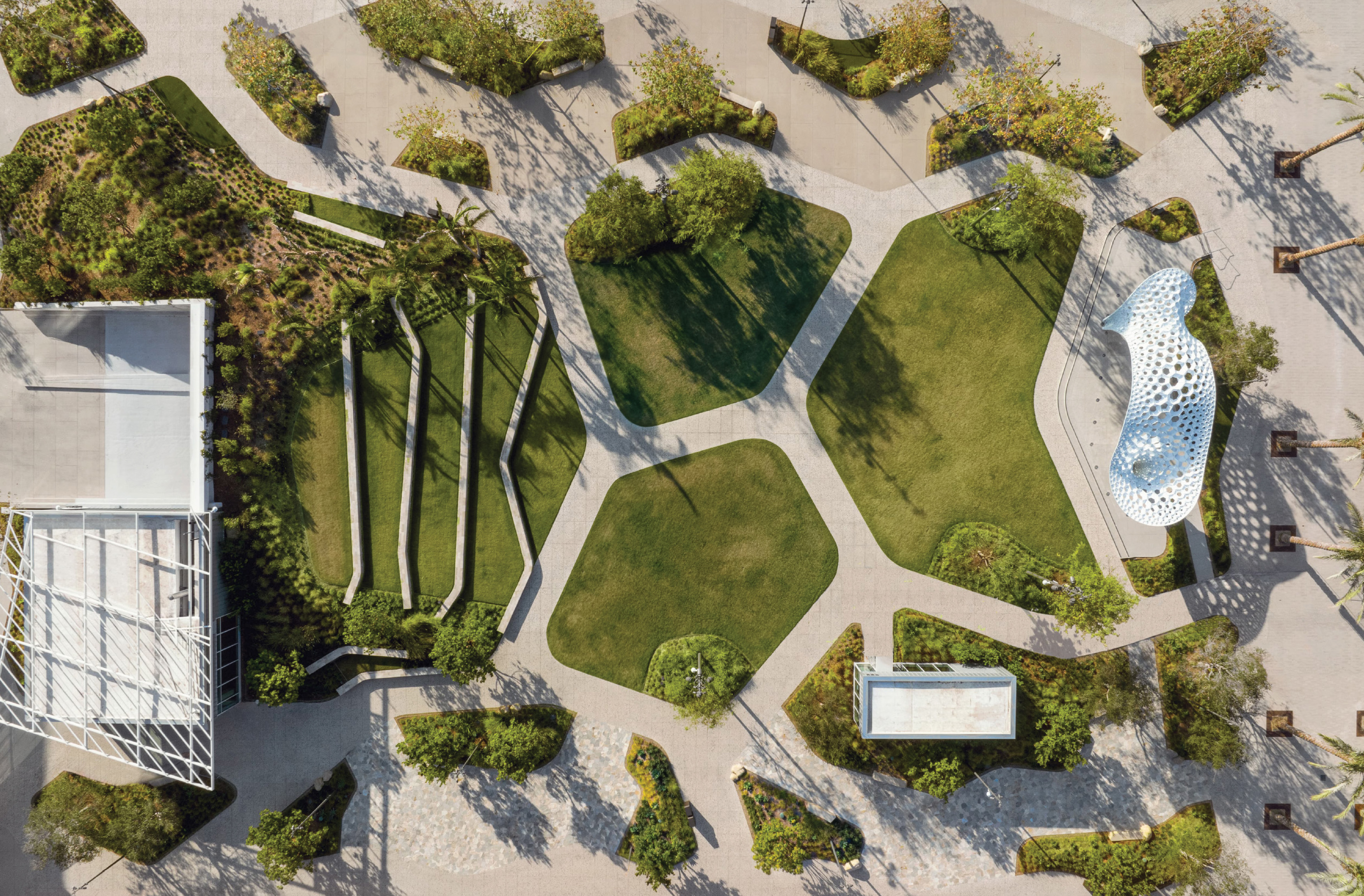
RSM Design’s work on San Diego’s Research and Development District (RaDD) illustrates this integration directly. Set along six city blocks on the historic waterfront, RaDD is envisioned not simply as a place to work, but as a mixed-use destination where science, art, culture, and community converge. The central design question guiding the project was pointed: what would it look like if a research environment truly reflected the culture, community, and environment it serves?
The answer invokes all four intelligences. Through cohesive branding, the RaDD identity was refined and sharpened, drawing from the visual language of chemistry, molecular structures, and elemental grids to create a system that could communicate a sense of identity and belonging on multiple scales. Surfaces also carried subtle biological references and coastal hues (drawn from San Diego’s tidal charts, kelp beds, chaparral, and city skyline), curated to both delight and ground the people moving through the district.
At RaDD, this sense of constantly arriving somewhere new communicates that this place was designed for the people who experience it day in and day out. Deeper circulation builds curiosity and discovery. Art installations cultivate moments of genuine wonder, each one intentionally positioned to shift the emotional register of the space before guiding guests onward as they circulate, move through, and discover the RaDD campus.
Research and Development District, San Diego, CA
Designing for the Whole Human Experience
What cognitive mapping, emotional resonance, physical choreography, and spiritual connection share is a commitment to honoring the journey of each person moving through a space. Frankl’s insight points to something designers intuitively understand: the quality of an experience is determined by a highly interconnected and emotional relationship between people and place.
From the macro design decisions that govern spatial layout to the micro choices concerning the typography on informational plaques, each of these represent intentional decisions that choreograph how a person should feel at that point in their user journey. An environment designed to inspire, inform, and endure in the legacy of its community leaves nothing of the user experience to chance.
Contemporary designers share the conviction that engaging the four intelligences enriches and expands what is possible in place-based relationships. In keeping with this mission, RSM Design is committed to creating thoughtful design solutions that don’t just help people find their way, but help people feel it.
Read A Mind in Motion Part 1 ›