Design for Discovery
Posted May 19, 2026 · Education
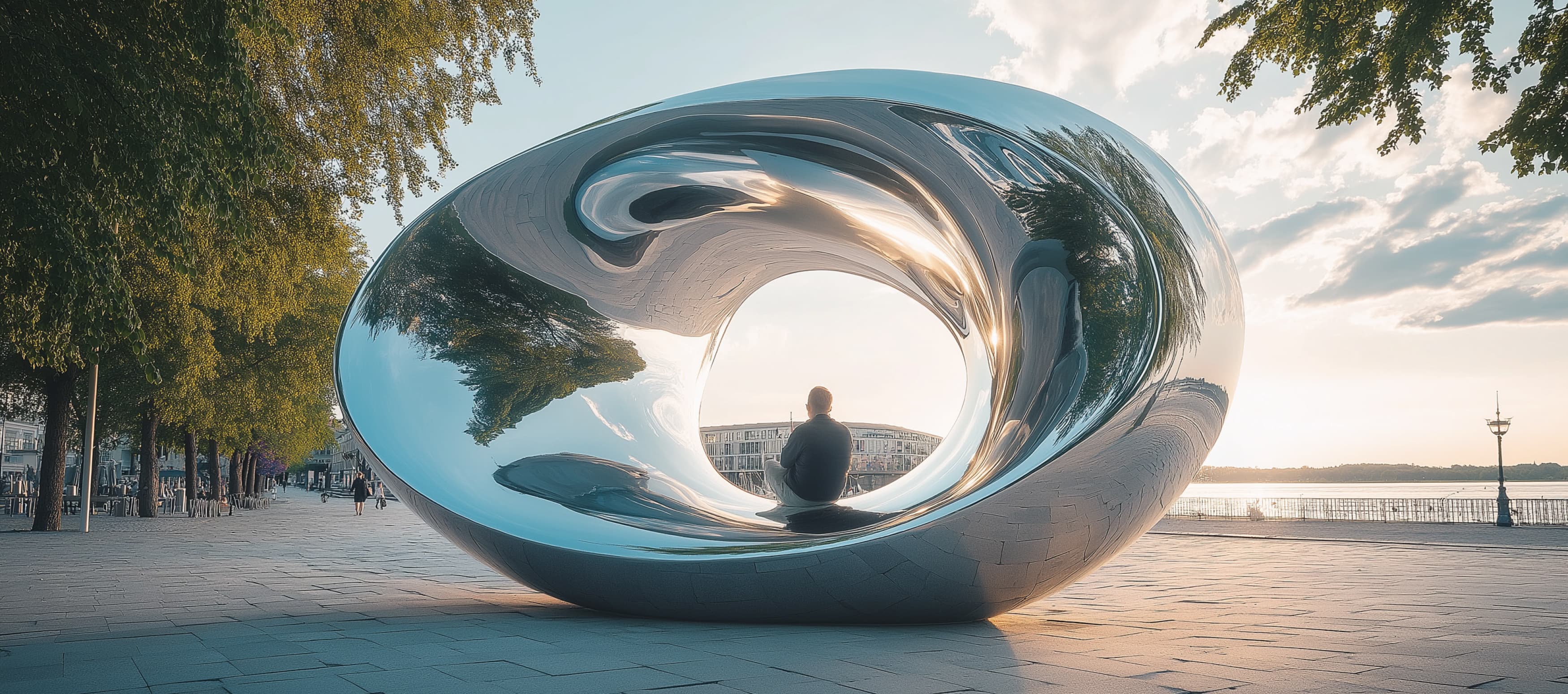
BY CODY CLARK, PRINCIPAL & LOS ANGELES STUDIO DIRECTOR
The built environment is, at its core, a communication system. Branding, colors, materials, finishes, and wayfinding can carry meaning. When the design elements within a space are united by shared purpose, something deeper becomes possible: a sense of discovery, belonging, and genuine connection to place.
At the heart of environmental graphic design lies this challenge: understanding how each project can extend the visitor’s experience, anticipating needs, and offering unexpected moments of delight and surprise along the way. Achieving this requires a design philosophy rooted in human needs and behavior, one that engages the whole person in ways that feel natural and enduring.
When these conditions are met, true discovery begins to unfold. A person feels, perhaps without being able to articulate why, engaged with the environment and encouraged to discover more.
A Collaborative & Intentional Design Process
Designing for discovery requires a framework that is highly collaborative in nature. Exhibit designers, curators, historians, architects, and specialists each bring a unique perspective to the table, converging around a common purpose. Together, they arrive at a design direction that no single discipline could have reached on its own.
Research anchors a project from the outset. Understanding user needs and behaviors alongside the cultural, historical, and physical context of a space forms the foundation on which design decisions rest. From that foundation, informed design solutions can emerge, allowing stories to be told with clarity and precision, and to connect more meaningfully with the people they are meant to reach.
Through a deep understanding and creative alignment with the design team springs design intention—delving into how a visitor can experience the environment emotionally, physically, and mentally. Together, the design team produces holistic design solutions that lend itself to effective spatial storytelling, which acts as the connective tissue in the built environment. Each space presents an opportunity to further a narrative, offer context, and create opportunities for reflection. With the certainty to explore confidently, variety in spatial scale, graphics, or content, and delight arriving by way of unexpected details, a space begins to feel less like something visitors pass through and more like somewhere they truly arrive.
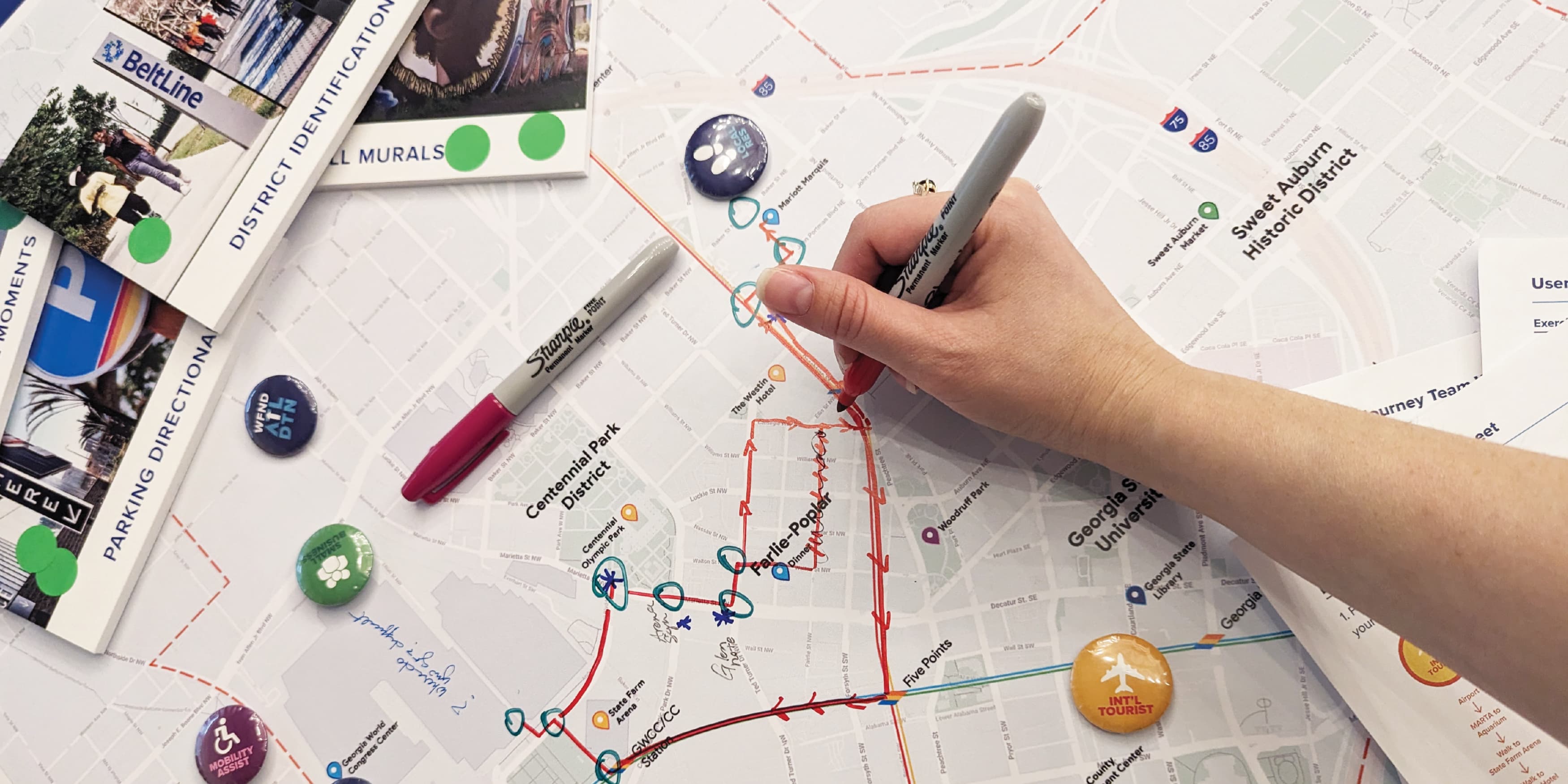
Elements of Discovery Working in Harmony
Successful design is not the sum of its parts, it’s the integrity of their relationship. When each element of a space works in concert to support a shared intention, the result is an environment that feels cohesive, intentional, and alive. Design harmony reinforces the narrative and sense of place that clients and design teams set out to create, ensuring that no single decision exists in isolation. It is this alignment of components around a greater whole that transforms a well-designed space into a truly meaningful one.
It begins with a story. A memorable environment is anchored by a distinct and compelling narrative, one that reflects the values, context, and identity of the people and place it serves. This story becomes the foundation from which every subsequent design decision is made, providing direction, context, and purpose throughout the process.
From that story emerges a brand vocabulary, a curated set of visual and spatial elements that give the narrative a distinctive form. Typography, color, texture, scale, and imagery are developed not as isolated choices but as a cohesive system of expression, each reinforcing and supporting the others. This vocabulary becomes the visual language of the place, consistently communicating its identity across surfaces and experiences.
Environmental graphic design elements, ranging from monumentation to wayfinding systems, give visitors the confidence to move through and explore the space. When navigation feels intuitive and clear, attention shifts from orientation to curiosity, and people are free to engage more deeply with what surrounds them.
Finally, placemaking, expressed through public art, murals, and specialty graphics, invites people to linger. These are the moments of delight and surprise that transform a space from something to pass through into something worth staying for, deepening the emotional connection between visitor and place, making discovery feel like a natural and rewarding part of the experience.
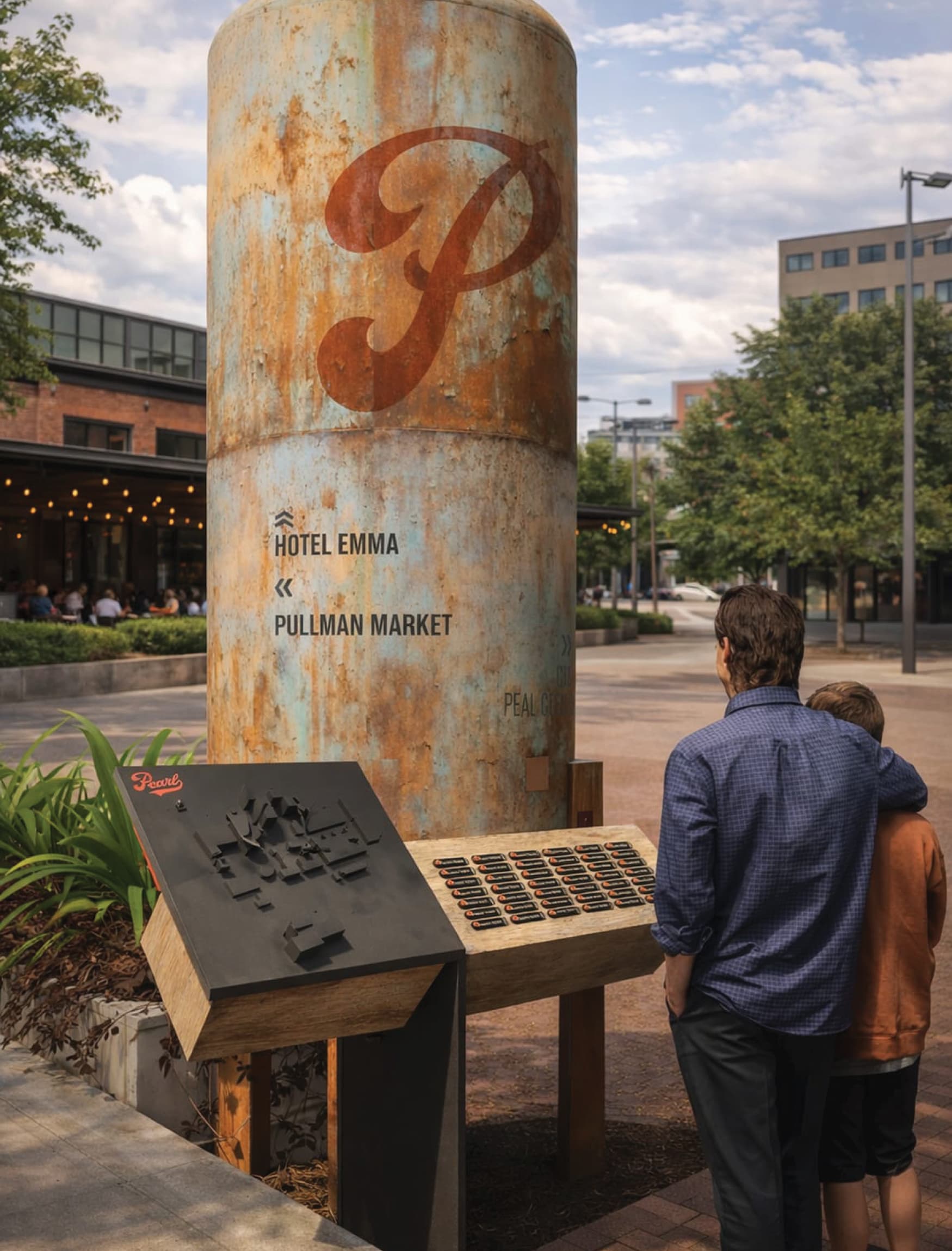
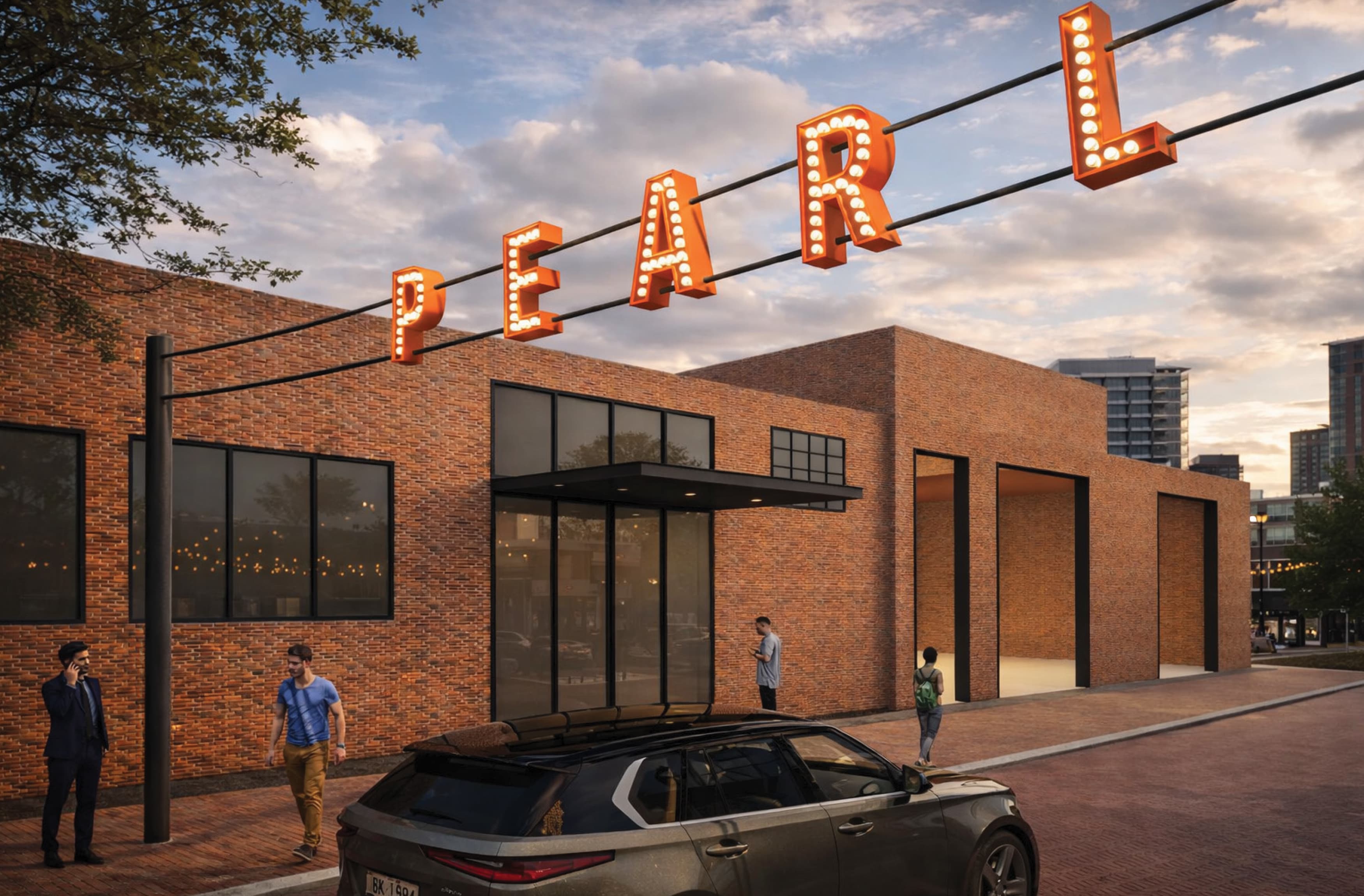
Pearl, San Antonio, Texas
Spaces of Curiosity & Wonder
These design efforts take shape differently in each environment, and it is within that specificity where design finds its greatest power. Whether inside a museum gallery, a branded destination, or a public streetscape, the opportunity to create a natural sense of discovery and connection exists wherever people are placed at the center of the design process.
Brand Identity & Discovery
These design efforts take shape differently in each environment, and it is within that specificity where design finds its greatest power. Whether inside a museum gallery, a branded destination, or a public streetscape, the opportunity to create a natural sense of discovery and connection exists wherever people are placed at the center of the design process.
Exhibit Design & Discovery
Museums and exhibitions hold a distinct power in the built environment: the power to engage a person inside a story. Through scale, materiality, depth, and spatial rhythm, story and space are developed synchronously, each reinforcing the other, so that the act of moving through the exhibit becomes a way of understanding it.
This is where the full integration of environmental graphic design becomes most visible. Wayfinding gives visitors the certainty to explore, minimizing hesitation, freeing their attention for the content around them. Public art and branded graphics establish an overarching atmosphere, while interactive and digital displays transform observation into participation and delight.
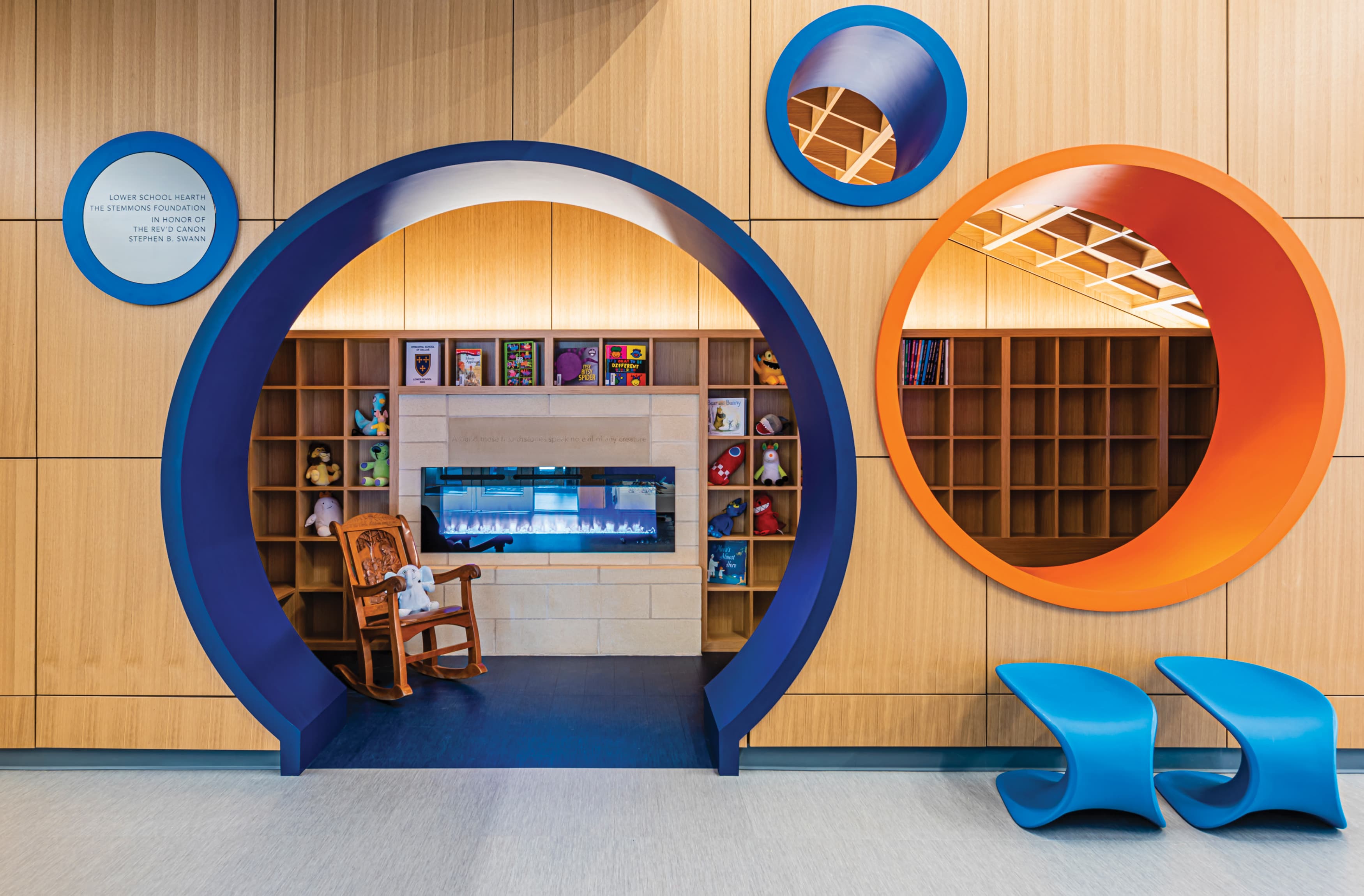
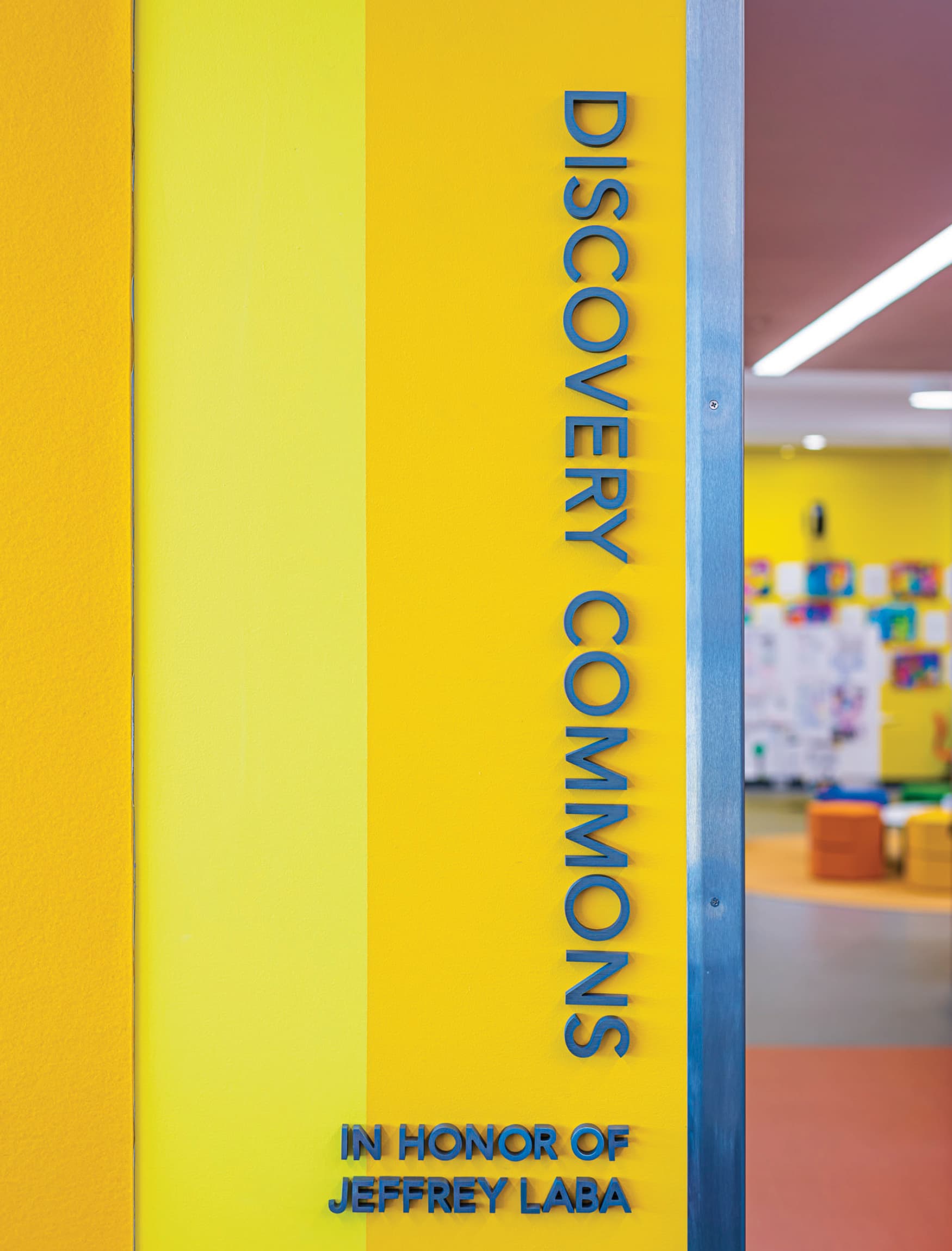
The Episcopal School of Dallas, Dallas, Texas
Discovery in the Public Realm
The public realm is where discovery is most democratic. A civic plaza, a cultural campus, a streetscape, or a waterfront promenade belongs in part to each person who passes through it, and the design of those spaces has the capacity to communicate something unique to each one. When the built environment is considered at this scale, with attention to the stories embedded in a neighborhood alongside the rhythms of how people move through public space, the result is placemaking that fosters genuine community pride.
Public art, interpretive graphics, and environmental storytelling are the means by which a place articulates its own identity and invites residents and visitors into a larger narrative. A streetscape that reflects the history of its neighborhood invites people to see themselves as part of something enduring. A cultural institution whose design honors the communities connected to its collection fosters a sense of belonging that goes far deeper than one that treats those communities as subject matter alone.
Discovery in the public realm is not a private experience. It is shared and cumulative, capable of shaping how a community understands its relationship to the places it inhabits, and more importantly, to one another.
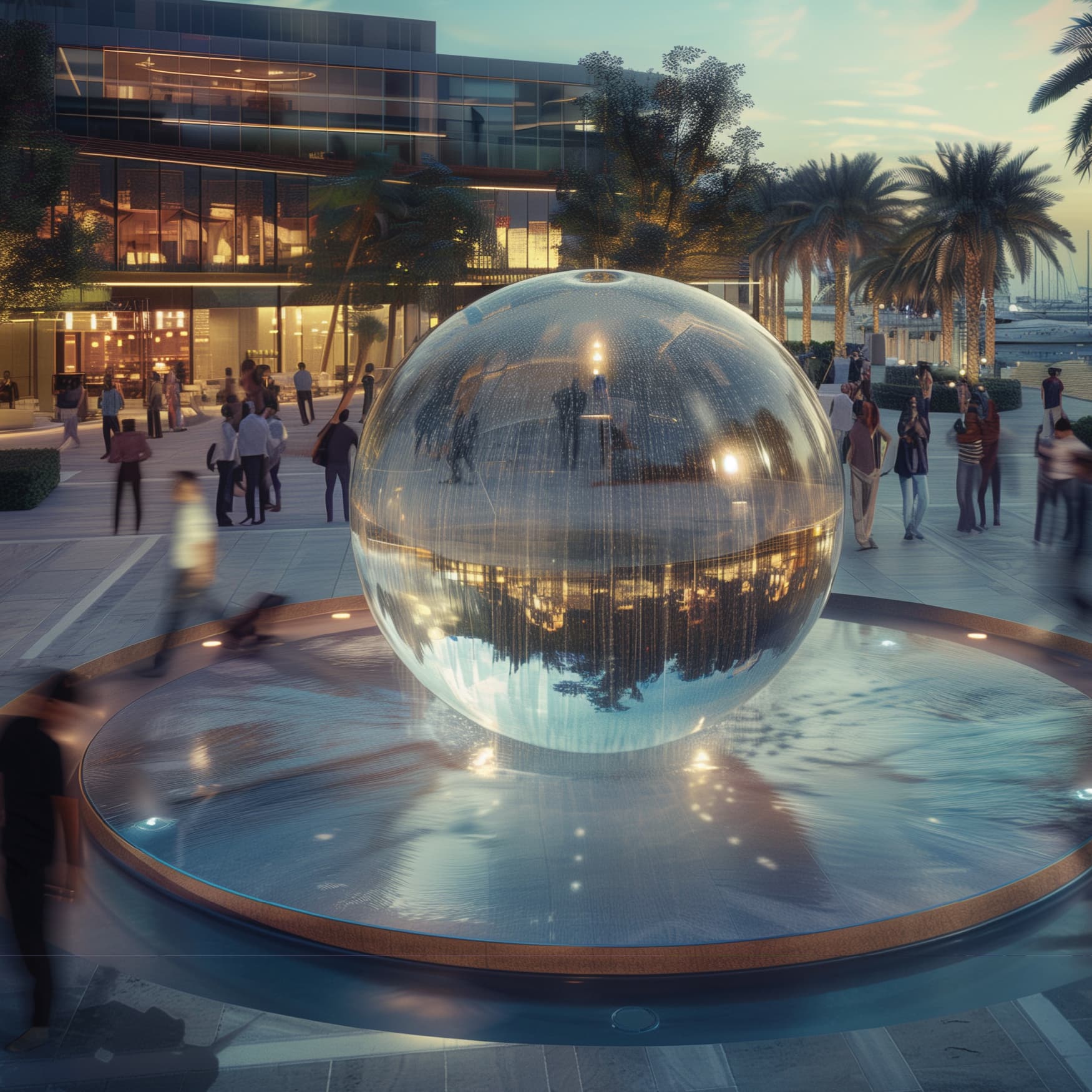
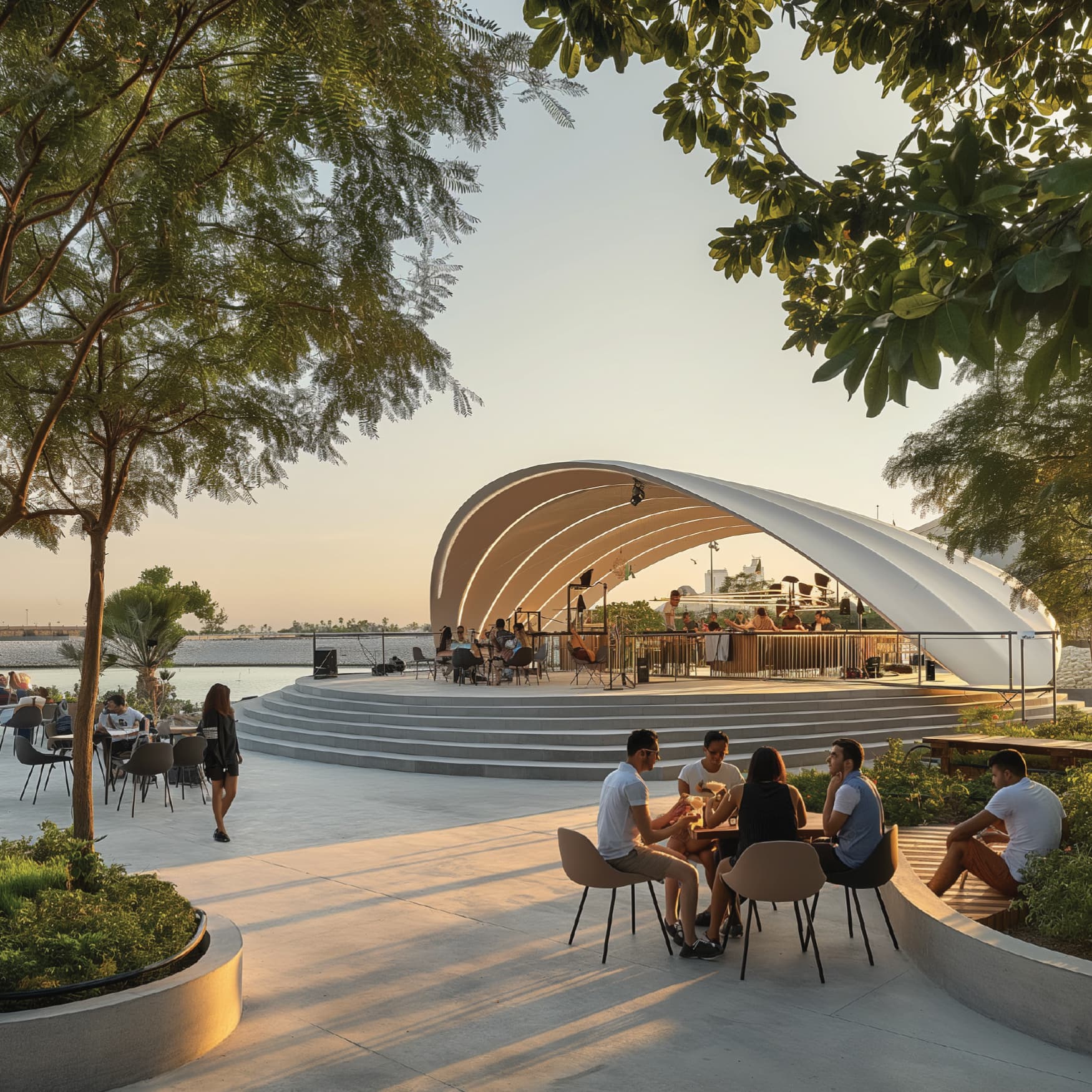
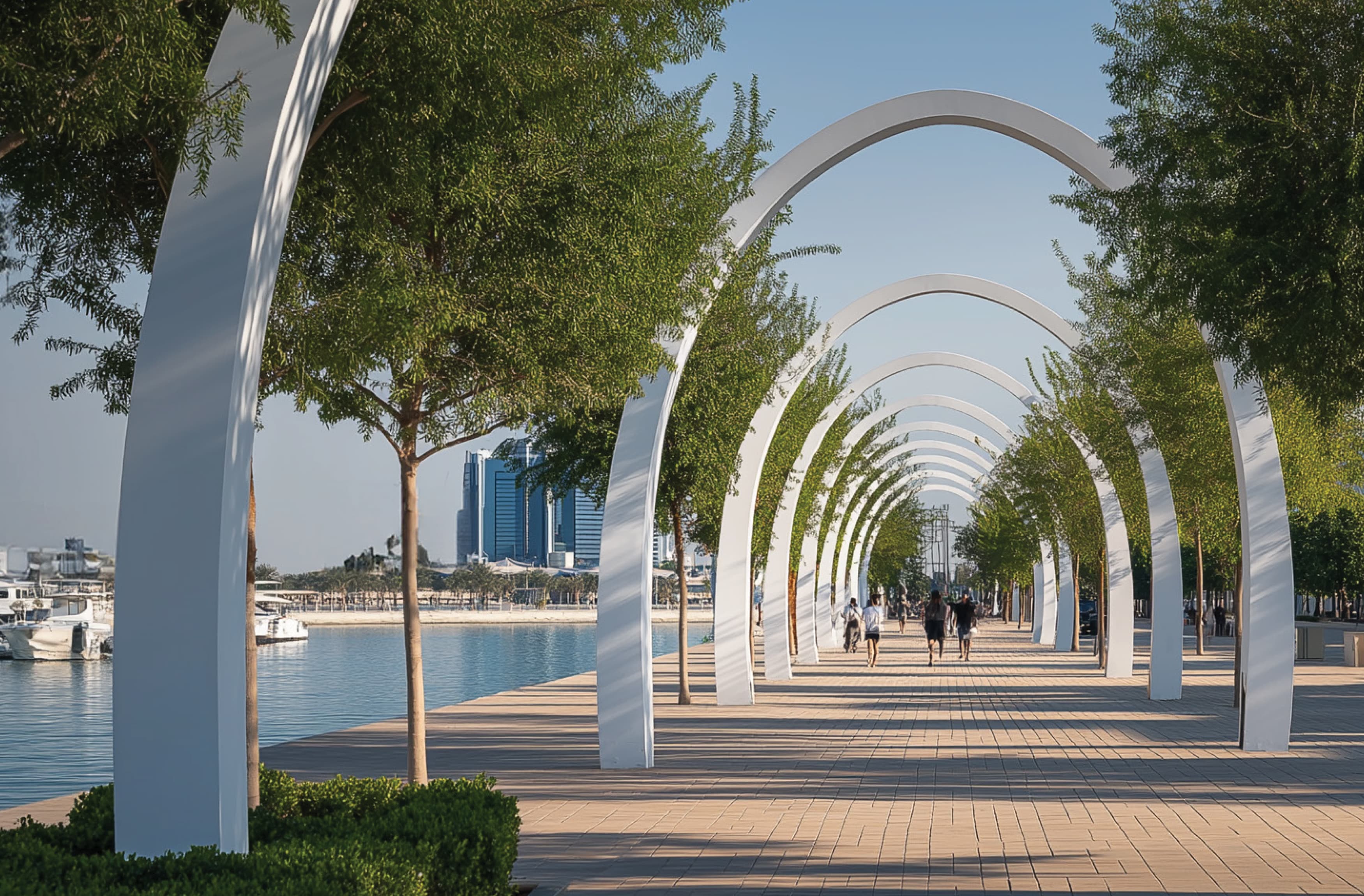
Ramhan Marina Island, Abu Dhabi, United Arab Emirates
The Value of Discovery
Throughout history, the most enduring spaces in the built environment have become more than functional. From ancient civic plazas to celebrated cultural institutions, architecture and design have long carried the capacity to move people, orient communities, and express shared values. What distinguishes truly memorable environments is the intention behind them, a willingness to uncover what makes a place uniquely meaningful and to let that purpose shape important design decisions. When that process of discovery is embraced, spaces become more than containers for activity. They become experiences that resonate, inspire, and endure.
That capacity for meaning has never been more important. In an era defined by information abundance and competing distractions, the challenge is no longer access — it’s depth. People are not simply looking for places to go, they are looking for places that make them feel, experiences grounded in reality.
When discovery is embraced as a core design principle, something shifts. Visitors become active participants, drawn into a more mutual and immersive conversation with their surroundings. Brands and institutions that invest in this level of intentional design build relationships with their audiences that are rooted in shared experience, the kind that resonates across individuals and communities and is difficult to replicate through any other means.
The most meaningful discoveries leave a lasting impression. A person who has felt the weight of a space’s narrative, the scale of its ideas, and the breadth of its environment carries something forward long after the visit ends. That kind of connection, formed at the intersection between people and place, is what makes designing for discovery a foundational part of the creative process.